7 Best Audi RS Q3 Body Kits for Buyers in 2026
Choosing an Audi Rs Q3 Body Kit is about more than adding sharper lines. The right setup should suit the car’s generation, preserve practical clearance, and fit without guesswork. Small details matter: bumper gaps, mounting points, sensor openings, and the finish around each edge. A kit can look perfect in a product photo and still disappoint when it meets your driveway.
Automotive engineer Colin Chapman is often credited with the line, “Adding power makes you faster on the straights. Subtracting weight makes you faster everywhere.” His advice was not about RS Q3 body kits, but it offers a useful buying principle: consider function, weight, and balance alongside appearance. A deeper front splitter may look dramatic. It may also scrape on a steep entrance. Check material, included hardware, installation guidance, and the seller’s fitment notes before deciding. Ask for clear photos of the exact model year, not just a similar vehicle.
This guide compares seven options for 2026 buyers, from restrained styling upgrades to more assertive designs. It focuses on fit, finish, material, and everyday usability—not unsupported promises about performance. Still, no shortlist can replace a careful fitment check. Confirm compatibility with your vehicle’s trim and existing equipment, and review local requirements before purchase. The best choice is not always the boldest one. Sometimes, the details tell the story.
Audi RS Q3 Body Kits: Key Parts and Buyer Considerations in 2026
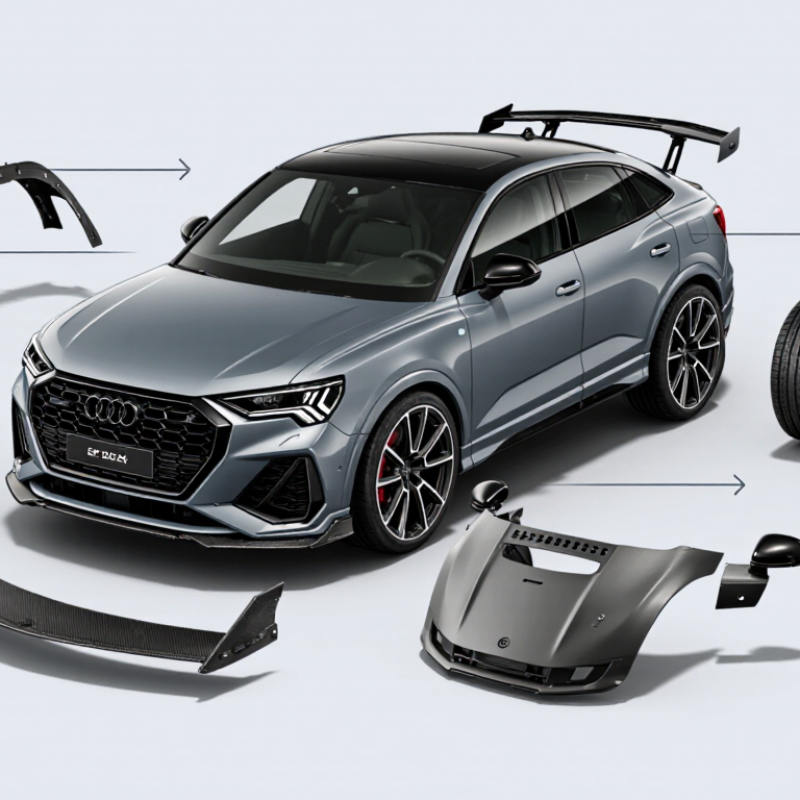
Choosing a body kit for a 2026 RS Q3 starts with confirming the exact model year, trim, and factory options. Small differences can affect bumper and sensor fitment. Check whether the kit includes a front splitter, side skirts, rear diffuser, or roof spoiler; some listings show parts that are sold separately. Measure ground clearance before choosing a lower front lip. Steep driveways can turn a sharp-looking detail into a daily nuisance. Not glamorous, but important.
Material affects both fit and upkeep. Flexible plastics may tolerate minor knocks better, while fiberglass can need more careful handling and adjustment. Ask for clear installation instructions, hardware details, and information about any required drilling. Before paint, test-fit every panel and inspect the gaps under good lighting. A few millimeters can stand out against the original bodywork. Also check that parking sensors, cooling openings, and the tailgate remain unobstructed. A kit’s styling claims do not prove improved aerodynamics; look for credible testing if performance matters. Fitment guides are useful, not infallible, so verify details with a qualified installer.
How to Compare Seven Body Kit Options for the RS Q3
Comparing seven RS Q3 body kit options starts with fitment, not appearance. A front lip can sharpen the nose, but check its ground clearance against your driveway ramp. A splitter adds a stronger edge and may need more careful mounting. Side skirts visually lower the vehicle; compare their length with the doors and factory trim. Small detail. Uneven gaps can make a polished kit look unfinished.
At the rear, a diffuser changes the bumper’s appearance, while a spoiler adds height and visual weight. An overfender gives the wheel arches a broader look, but inspect how it meets the original panels. A complete kit ties these pieces together, though it may require more installation time and alignment. These are seven distinct choices, not seven equal upgrades. Check the listed model years, sensor locations, and exhaust clearance before deciding. A product image cannot confirm those details.
Material and finish matter, too. Flexible parts may tolerate minor contact better, while rigid pieces can hold a crisp edge but need precise fitting. Ask whether mounting hardware and installation instructions are included. Compare the unfinished part’s surface, not only its paint-ready photos. I would be cautious about assuming “direct fit” means zero adjustment; tolerances can vary. If possible, review clear underside and attachment-point photos before placing an order.
Design, Materials, and Fitment of the Featured Kits
Seven Performance SUV Body Kits for 2026
A useful shortlist compares design, material, and fitment—not just dramatic photos. Front splitters and side skirts can sharpen the vehicle’s profile, while a rear diffuser adds visual depth. Check their clearance against the car’s actual ride height. A low splitter may scrape on steep driveways. Small detail, big annoyance. ABS and polyurethane are common choices for flexible exterior parts; fiberglass can be light, but may crack under impact. Carbon-fiber finishes look distinctive, yet the surface appearance alone says little about strength or construction.
SEMA’s 2023 U.S. Market Data report estimated the specialty-equipment market at $52.3 billion in 2022. That figure shows the scale of customization, not the quality of any particular kit. For each featured option, inspect mounting points, panel gaps, and whether the parts are designed for the exact model year and factory bumper. Ask for installation instructions and material details before ordering. A perfect catalog photo proves little. Even a well-matched kit can need adjustment; paint and labor can also change the real cost. Fitment claims deserve scrutiny, especially when sellers provide no clear installation evidence.
Installation, Compatibility, and Road-Legal Requirements
A body kit for a compact performance SUV should fit its exact generation, not just its model name. Front and rear bumpers may differ across model years, while parking sensors, cameras, and wheel-arch liners need clearances. Before buying, compare the kit’s part numbers with the vehicle’s year and trim, then ask an experienced installer to check mounting points and sensor operation. A clean-looking fit is not always a correct fit. SEMA’s 2023 U.S. market report estimated specialty-equipment sales at $52.3 billion in 2022; that figure reflects the wider aftermarket, not body-kit sales alone.
Tips: Request a written fitment list and installation instructions. Test every sensor and camera after fitting. Check that lights, reflectors, number plates, and tyres remain unobstructed. Keep the approval paperwork.
Road legality varies by country and region. A wider bumper, sharp edge, or altered lighting position may trigger inspection or approval requirements. Ask the relevant vehicle inspection authority before installation, and confirm any insurance implications with your insurer. Keep invoices and any conformity documents with the vehicle. Small gaps matter: a loose corner can rub against a tyre or catch road debris. Even careful planning can miss a detail, so inspect the kit again after the first short drive.
How to Choose a Body Kit Based on Budget and Driving Needs
For a performance SUV, choose a body kit around how you drive, not just how it looks in photos. A front splitter can sit awkwardly low on steep driveways, speed humps, and winter-rutted roads. Measure the current ground clearance, then compare the kit’s published dimensions before paying. Daily commuters may prefer a modest lip and side extensions; track-day drivers might value firmer, better-tested components. Looks can mislead. Ask for material specifications, mounting instructions, and replacement-part pricing. A cheap kit can become costly if its brackets need custom work or its panels require extensive sanding.
Budget for fitting and paint, not only the parts. The U.S. Department of Energy estimates that reducing vehicle weight by 10% can improve fuel economy by 6–8%; this is not a direct forecast for adding a kit, but it shows why extra mass deserves consideration. The SEMA 2023 market report valued the U.S. specialty-equipment market at $52.3 billion in 2022, yet a large market does not guarantee consistent fit or durability. Check return terms and inspect mounting points. I would also recheck clearance after installation; even careful measurements can miss a steep driveway.
7 Best Audi RS Q3 Body Kits for Buyers in 2026: Compare Material Density
Representative density of common body-kit materials (g/cm³). Lower density can mean less material weight for the same volume, but finished-part weight also depends on thickness and design.
Values are approximate typical material densities; formulations and composite construction vary. Compare the weight and fitment of the actual parts when choosing a kit for your budget and driving needs.