
Blog
What Is the Best Drum Lifter for Global Buyers in 2026?
Choosing the best drum lifter for global buyers in 2026 requires more than comparing prices and photographs. A suitable model must match drum weight, diameter, material, and lifting frequency. Steel, plastic, and fiber drums can behave differently during handling. A lifter that grips one securely may damage another.
Safety comes first. Buyers should examine rated capacity, locking systems, fork compatibility, and load stability. Clear technical drawings matter when warehouse aisles are narrow or loading bays are crowded. Independent test records and traceable quality documentation can also reduce purchasing risks. Regional requirements may differ, so importers should verify applicable workplace and machinery standards before ordering.
Real operating conditions reveal weaknesses. A drum lifter may perform well during a short demonstration but struggle after repeated lifting cycles. Rust protection, replaceable contact pads, and accessible spare parts deserve attention. Delivery time and local service can matter as much as the initial quotation. Sometimes, the cheapest option becomes expensive.
There is no universal best choice. A global buyer handling 210-liter steel drums needs different features from a chemical distributor moving smaller plastic containers. The right decision balances safety, durability, maintenance, operator training, and total ownership cost. This guide examines practical lifter types, selection criteria, supplier reliability, and common purchasing mistakes. Some recommendations may still require site testing. That is an important limitation, not a weakness.
What Is a Drum Lifter and Why Do Global Buyers Need One?
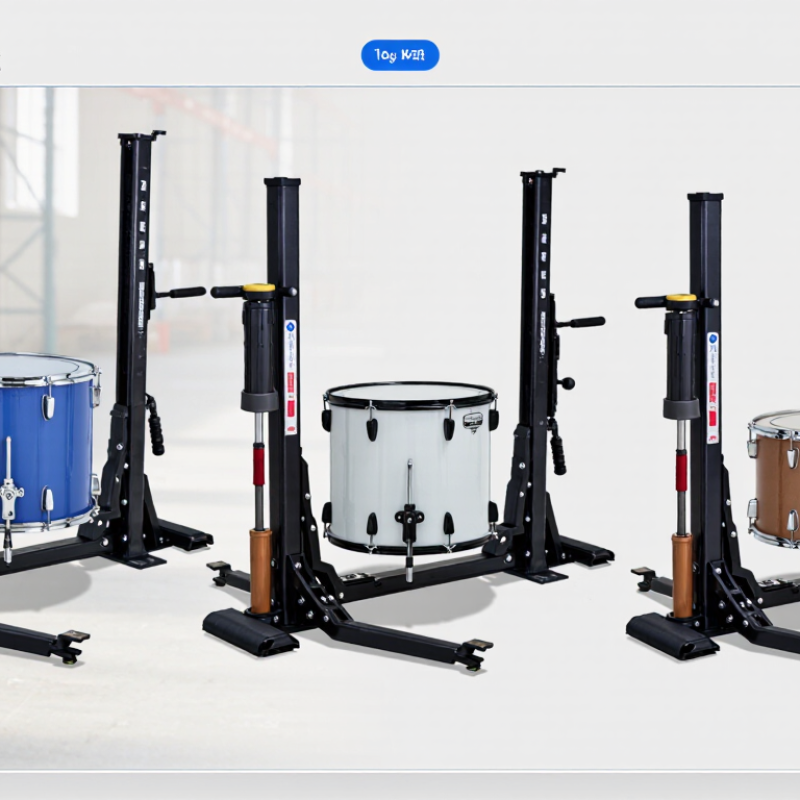
A drum lifter is a handling device designed to grip, raise, tilt, or move cylindrical drums. It may use a clamp, cradle, hook, or powered lifting frame. Unlike a simple trolley, it can position a drum with greater control. This matters when drums weigh hundreds of kilograms or stand on uneven warehouse floors. One careless movement can damage the container, spill material, or injure nearby workers.
Global buyers need drum lifters because international warehouses often handle different drum sizes, materials, and storage layouts. A suitable model can reduce manual lifting and improve loading consistency. Buyers should check rated capacity, drum diameter, lifting height, turning range, and power requirements. Compatibility with forklifts or existing hoists is equally important. It is not a crane. Choosing capacity by appearance alone is a risky mistake.
Practical evaluation should include a loaded trial, not only a catalog review. Watch how the jaws contact the drum rim. Check whether the operator can see the load while moving it. Test controls with gloves and inspect locking points after several cycles. In my experience, buyers sometimes focus on purchase price and overlook maintenance access. That detail matters. A cheaper lifter may become costly when seals, wheels, or clamps are difficult to replace. Requirements also vary by country, so buyers should verify workplace procedures, equipment documentation, and local safety expectations before ordering. No single lifter suits every site.
What Is the Best Drum Lifter for Global Buyers in 2026?
A drum lifter is material-handling equipment designed to lift, move, position, and sometimes rotate industrial drums safely. The best model depends on drum volume, maximum gross load, lifting height, operating environment, and the required attachment type.
The chart compares common nominal industrial drum sizes. A 55-gallon drum is approximately 208 liters, while 30-gallon and 15-gallon drums are approximately 114 liters and 57 liters. Buyers should select a drum lifter with a rated capacity above the complete loaded drum weight and confirm compatibility with the drum material, rim design, and lifting method.
Which Drum Lifter Types Are Available for Different Handling Tasks?
Choosing the best drum lifter for global buyers in 2026 starts with the handling task, not the catalog photo. Different drum lifter types solve different problems. A manual drum lifter suits occasional movement across smooth floors. It is simple, affordable, and easy to inspect. Yet, it may feel slow in a busy warehouse. Small teams should consider this limitation.
Forklift drum attachments work better for frequent transport and higher loads. Mechanical grabbers can lift steel or plastic drums from the floor, then place them on pallets. Hydraulic models reduce operator effort during repeated lifting. Electric lifters offer quieter movement and precise positioning indoors. Check rated capacity, drum diameter, lifting height, and attachment security before purchase.
Some operations need specialized designs. Vertical drum lifters keep containers upright during stacking and storage. Horizontal drum handlers support controlled side placement or dispensing tasks. Clamp-style lifters handle standard rims, while adjustable models suit mixed drum sizes. A narrow aisle may require a compact turning radius. Wet floors demand careful wheel and brake selection. These details matter more than impressive lifting numbers. In my experience, buyers often underestimate battery charging space and maintenance access. That mistake becomes expensive. A reliable supplier should provide load charts, inspection guidance, spare-part information, and operator training materials. No single type fits every site. Evaluate the actual floor, drum material, workflow, and shift frequency before choosing.
How Do You Compare Drum Lifter Capacity, Safety, and Compatibility?
For global buyers in 2026, the best drum lifter is not simply the model with the highest capacity. A 500-kilogram rating may look impressive, but it can mislead if the drum’s center of gravity shifts during lifting. Check the safe working load, not only the breaking load. Include the drum, contents, attachment, and any uneven movement in your calculation. Leave a sensible margin.
Safety details deserve close inspection. A positive locking mechanism should hold the rim firmly, even when the forklift stops suddenly. Look for secondary retention, visible load indicators, guarded pinch points, and corrosion-resistant parts. Request inspection records, test certificates, and clear maintenance instructions. During a site review, measure aisle width, floor condition, lifting height, and operator visibility. Small obstacles can create large risks.
Compatibility is often overlooked. Confirm the drum diameter, rim profile, material, and weight range before ordering. Some lifters suit steel drums but grip plastic drums poorly. Others require a forklift, crane, or compatible lifting hook. Check connection dimensions and the equipment’s rated capacity together. A mismatch can damage the drum or destabilize the load. Ask for drawings and trial-fit photos when possible. I would also question vague claims like “universal fit.” They sound convenient, but real sites rarely behave universally. Local inspection practices and workplace requirements may differ, so technical documents should be reviewed by a qualified safety professional before use.
What Standards and Features Matter in International Drum Lifter Purchasing?
International drum lifter purchasing should begin with standards, not catalog photographs. A suitable unit should show its safe working load, drum diameter range, load center, self-locking method, and test evidence. ISO 12100 supports systematic machinery risk assessment, while ISO 3691-1 addresses safety requirements for powered industrial trucks. For suspended or forklift-mounted attachments, EN 13155 may also apply, depending on the design and market. Buyers must verify the exact scope. One standard rarely covers everything.
Field experience shows that small details prevent expensive failures. Look for a positive drum grip, visible locking indicators, guarded pinch points, corrosion-resistant surfaces, and replaceable contact pads. The frame should remain stable when the drum is tilted, raised, or transported over uneven concrete.
OSHA reports about 85 annual forklift-related fatalities and 34,900 serious injuries in the United States. That figure is a useful warning, although it does not specifically measure drum lifters. Operator training, attachment approval, and documented inspections still matter.
International buyers should request factory load-test records, material certificates, operating instructions, and traceable serial numbers. Check whether conformity documents match the destination country, not merely the manufacturing location.
MHI’s 2024 Annual Industry Report found that 83% of supply-chain professionals were increasing technology investment, yet automation does not remove basic mechanical risks. I would not trust a polished brochure alone. This assumption is risky. A practical trial with the actual drum, forklift, aisle width, and floor condition can reveal problems that laboratory figures miss.
How Can Buyers Select the Best Drum Lifter for 2026 Operations?
Selecting the best drum lifter for 2026 operations starts with the actual workplace, not a catalogue image. Measure drum diameter, weight, height, and center of gravity. Check whether operators need vertical lifting, pouring, rotating, or simple transport. A lifter rated for 350 kilograms may perform poorly when loads shift during tilting. Stability matters more than impressive capacity.
The International Labour Organization reported about 2.93 million work-related deaths and 395 million non-fatal injuries globally in 2023. These figures reinforce a practical point: reduce manual handling and uncontrolled movement. Buyers should verify rated load, braking performance, fork or clamp engagement, emergency lowering, and guarding. ISO 11228 guidance also supports evaluating force, posture, frequency, and carrying distance. Ask for test records, not only declarations.
Power choice needs equal attention. Electric models suit repeated indoor movement, while manual units can remain useful in low-frequency operations. Measure aisle width and turning space first. Then examine battery runtime, charging arrangements, surface conditions, and maintenance access. Corrosion-resistant construction is valuable around moisture, chemicals, or washdown areas. I would not assume the heaviest frame is safest. It may create harder steering and slower emergency responses. Operators should trial the lifter with a real drum, on the real floor, before purchase. That small test often exposes overlooked problems.
| Drum Lifter Type | Typical Rated Capacity | Compatible Drum Formats | Typical Lift Height | Power and Drive | Drum Handling Functions | Best Operational Use | Main Advantages | Key Limitations | 2026 Selection Score |
|---|---|---|---|---|---|---|---|---|---|
| Manual Drum Truck | Approximately 200–450 kg | Commonly 200 L steel drums; some models support plastic drums | Ground level to approximately 300 mm | Manual push and hydraulic hand pump | Move, tilt, and position one drum; limited lifting | Short-distance movement on smooth floors | Low purchase cost, simple maintenance, no battery charging, suitable for low-throughput operations | Requires operator effort; limited lift height and productivity; less suitable for frequent loading | 3.2 / 5 |
| Manual Hydraulic Drum Stacker | Approximately 250–500 kg | Steel, plastic, and fiber drums within the clamp range | Approximately 1,000–1,600 mm | Manual hydraulic lift with manual steering | Lift, transport, stack, and place drums on pallets or low shelves | Small warehouses and low-frequency vertical handling | Higher lift than a drum truck; compact footprint; no electrical infrastructure required | Slower work cycle; operator fatigue can increase during repeated lifting | 3.7 / 5 |
| Powered Drum Stacker | Approximately 300–600 kg | Usually 200 L steel or plastic drums; verify clamp compatibility | Approximately 1,500–3,000 mm | Battery-powered lift and travel; walk-behind steering | Lift, transport, stack, and position drums with reduced manual effort | Regular warehouse handling and medium-throughput operations | Improves handling speed and ergonomics; lower physical workload than manual models | Requires battery charging, operator training, and planned maintenance | 4.3 / 5 |
| Electric Drum Handler with Grab or Clamp Attachment | Approximately 300–1,000 kg, depending on configuration | Steel, plastic, and fiber drums when the attachment is correctly specified | Approximately 1,500–3,500 mm | Battery-powered lifting and travel | Lift, transport, stack, rotate, and dispense; optional single- or multi-drum handling | Best overall choice for repetitive 2026 warehouse, production, and distribution work | Strong balance of productivity, ergonomics, positioning accuracy, and attachment flexibility | Higher initial cost; battery life, charger compatibility, and attachment selection must be managed | 4.8 / 5 |
| Forklift Drum Rotator Attachment | Approximately 500–1,500 kg, subject to forklift capacity and attachment rating | Steel and plastic drums compatible with the rotator jaws | Determined by the host forklift | Powered by the host forklift; hydraulic or mechanical rotation | Lift, transport, rotate, empty, and position one or more drums | High-throughput facilities that already operate suitable forklifts | High capacity and fast handling; useful for loading, unloading, and controlled dispensing | Requires a compatible forklift, trained operator, and adequate aisle space; attachment weight reduces residual capacity | 4.4 / 5 |
| Explosion-Protected Drum Lifter | Approximately 250–1,000 kg, depending on design and certification | Drums used in classified or hazardous areas, subject to clamp and material compatibility | Approximately 1,000–3,000 mm | Manual, hydraulic, or electrically powered with hazardous-area protection | Lift, transport, stack, and sometimes rotate drums in controlled environments | Chemical, pharmaceutical, coating, solvent, and other potentially explosive atmospheres | Designed for risk-controlled handling where standard electrical equipment may be unsuitable | Higher acquisition and maintenance cost; site classification and certification must be verified before purchase | 4.6 / 5 for hazardous areas |
| Stainless-Steel Hygienic Drum Lifter | Approximately 250–800 kg | Food, pharmaceutical, and chemical-process drums compatible with hygienic contact surfaces | Approximately 1,000–2,500 mm | Manual hydraulic, electric, or battery-powered | Lift, transfer, and position drums while supporting cleanability requirements | Hygienic production areas and environments requiring corrosion resistance | Improved corrosion resistance and cleanability; suitable for washdown-oriented operations when specified correctly | Higher cost; stainless construction alone does not guarantee a sanitary design or regulatory compliance | 4.5 / 5 for hygienic areas |
| Mobile Drum Crane or Gantry Lifter | Approximately 250–1,000 kg | Drums handled with slings, hooks, grabs, or dedicated lifting attachments | Approximately 1,500–3,500 mm | Manual winch, hydraulic system, or electric hoist | Lift and relocate drums where pallet access or forklift access is limited | Maintenance areas, workshops, production cells, and irregular lifting tasks | Flexible access and broad attachment options; useful in confined or changing work areas | Lower travel productivity than a dedicated powered drum handler; stability and load control require careful assessment | 3.9 / 5 |
Related Posts
-
7 Tips for Choosing a Drum Lifter and Tilter?
-
2026 Best Drum Tilters for Efficient Material Handling Solutions?
-
How to Choose the Right Drum Tilter for Your Needs?
-

What is a Drum Tilter and How Does It Work in 2026?
-
What Are the Top 10 Drum Lifting Equipment Options?
-
Top Material Lifting Equipment for Global Buyers to Consider?