

Blog
How to Choose the Right Circuit Breaker Board?
Choosing the right Circuit Breaker Board is not a matter of selecting the largest cabinet or the cheapest listing. It requires a careful match between electrical demand, protection requirements, installation conditions, and future expansion. A board must safely distribute power while allowing breakers to interrupt faults before damaged wiring becomes a serious hazard. That balance matters in a quiet apartment, a dusty workshop, or a commercial space with sensitive equipment.
Mike Holt, a respected electrical educator, offers a useful reminder: “Electricity must be respected, not feared.” His words fit this decision closely. A reliable Circuit Breaker Board begins with accurate load calculations, not guesswork. Check the system voltage, incoming supply rating, available fault current, breaker compatibility, enclosure rating, and number of circuits. Look for clear labeling, sturdy busbars, adequate neutral and grounding arrangements, and room for future circuits. Small details matter. A loose terminal can create heat behind a closed cover.
Experience also shows where decisions can go wrong. Some buyers focus only on brand reputation. Others choose a board that fits today’s appliances but leaves no space for tomorrow’s heat pump or workshop tools. That can become expensive.
Do not rely on appearance alone. Verify certification, installation instructions, and local electrical requirements with a qualified electrician. Product specifications may look simple, yet site conditions often are not. The best choice is the board that provides dependable protection, practical maintenance access, and a realistic margin for change. Safety comes before convenience.
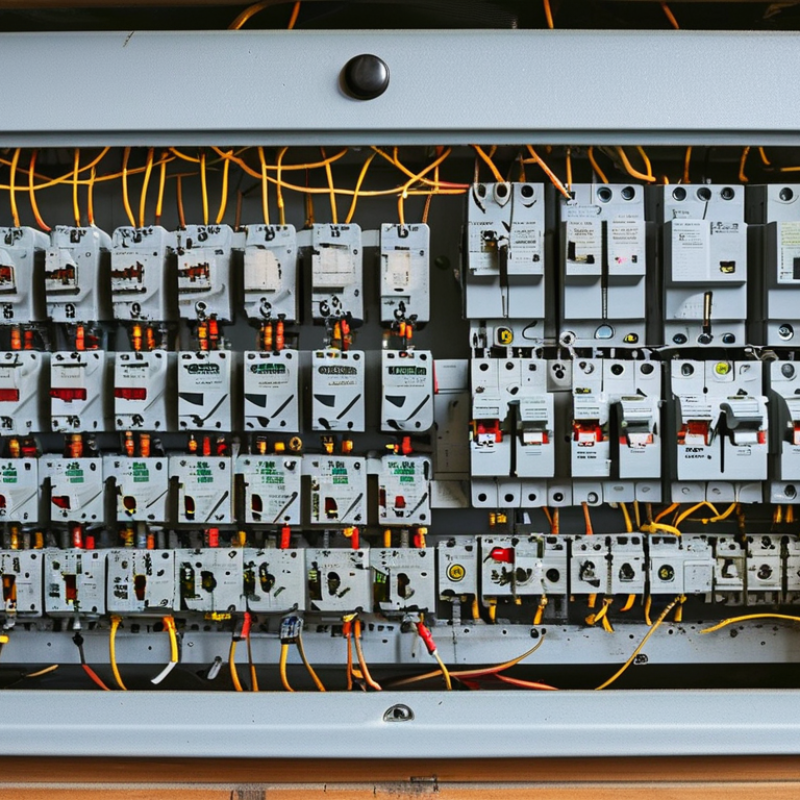
Understanding the Role and Types of Circuit Breaker Boards
How to Choose the Right Circuit Breaker Board?
A circuit breaker board distributes electrical power and protects each circuit from overloads and short circuits. It is the control point between the incoming supply and individual loads. When excessive current flows, a breaker opens the circuit and limits heat buildup in the wiring. Small residential systems often use a main breaker panel with branch breakers for lighting, sockets, and appliances. A subpanel adds capacity in a garage, workshop, or extension. Larger buildings may require panelboards or switchboards with higher ratings and more space.
Choosing the board means matching its voltage, current rating, interrupting capacity, and available breaker spaces. The enclosure also matters. A sealed cabinet suits damp locations better than a standard indoor enclosure. Leave room for future circuits. A crowded board makes inspection and maintenance harder. It is an easy detail to overlook.
In practical installations, the board should fit the service entrance, cable size, earthing method, and local electrical requirements. A qualified electrician should verify these points before installation. I have seen planning focus too heavily on the number of circuits and ignore heat, access, or labeling. That approach can create avoidable problems. Clear labels, firm terminations, and unobstructed working space improve reliability. Arc-fault and residual-current protection may also be appropriate, depending on the circuit and local rules. Never select a board by appearance alone. Safety depends on the complete system.
Assessing Electrical Capacity, Voltage, and System Requirements
How to Choose the Right Circuit Breaker Board?
Assessing Electrical Capacity, Voltage, and System Requirements
The right circuit breaker board starts with the building’s actual electrical demand. List lighting, outlets, heating, appliances, and future equipment. Add each load in watts, then divide by the system voltage to estimate current. This calculation is only a starting point. Motors, compressors, and other equipment may draw higher starting currents. A qualified electrician should verify the figures before installation.
Check the board’s rated current and voltage against the incoming supply. The main rating must support the expected load without overheating. Continuous loads often require additional capacity under local electrical rules. Leave practical spare space for future circuits. A crowded board makes inspection and maintenance harder. It also encourages poor cable routing. More capacity is not always better, because oversized protection may fail to protect smaller conductors.
System requirements matter just as much. Confirm the number of poles, phase arrangement, neutral configuration, grounding method, and available fault current. The breaker’s interrupting rating must exceed the fault level at the installation point. Consider moisture, dust, heat, and outdoor exposure as well. A neat enclosure can still be unsuitable. One common mistake is trusting an old load label without testing real demand. Measurements may reveal different results, so review the design carefully with current code requirements and qualified professional guidance.
Comparing Breaker Compatibility, Safety Features, and Standards
How to Choose the Right Circuit Breaker Board?
A circuit breaker board should match the breakers it is designed to hold. Check the manufacturer’s compatibility chart, busbar arrangement, pole spacing, and mounting method. A breaker may fit physically but still fail electrically. Confirm the board’s rated voltage, current, short-circuit capacity, and enclosure rating. These details matter near workshops, kitchens, and outdoor equipment.
Safety features deserve equal attention. Look for clear circuit labeling, touch-safe covers, reliable grounding, and sufficient wiring space. Some installations also require residual-current protection or arc-fault protection. Use devices tested to relevant standards, such as IEC 61439 for assemblies or IEC 60898-1 for certain household breakers. Local electrical rules may require different ratings. A neat installation can still be unsafe if protection coordination is ignored.
Tips: Measure before purchasing. Compare breaker type, pole count, current rating, and interrupting capacity. Check whether the board supports the selected cable sizes. Ask a qualified electrician to verify the design, especially in older buildings. I have seen compatibility assumed from appearance alone, and that assumption caused rework. I might also overlook future circuits when planning a compact board. Leave practical expansion space, not just empty gaps. Inspect labels, terminal torque, and test buttons after installation. Small omissions can become serious faults.
| Board Type | Typical Application | Compatible Breaker Format | Typical Voltage and Current Range | Key Safety Features | Relevant Standards | Selection Considerations |
|---|---|---|---|---|---|---|
| Residential Load Center | Single-family homes, apartments, and small residential extensions | Breakers specifically listed or approved for the enclosure; commonly plug-on or bolt-on thermal-magnetic breakers | 120/240 V AC Typically 60–225 A main rating | Dead-front cover, insulated busbars, neutral and grounding provisions, overcurrent protection, optional AFCI and GFCI protection | UL 67 for panelboards; UL 489 for molded-case circuit breakers; local electrical installation code | Confirm busbar design, breaker mounting method, available spaces, short-circuit rating, and whether AFCI or GFCI protection is required |
| IEC Consumer Unit | Residential and light-commercial distribution systems using modular DIN-rail equipment | DIN-rail miniature circuit breakers, residual-current devices, and residual-current circuit breakers compatible with the assembly | 230/400 V AC Common final-circuit ratings: 6–63 A | Finger-safe covers, modular barriers, neutral and protective-earth terminals, residual-current protection, and optional surge protection | IEC 61439-3 for distribution boards; IEC 60898-1 for household and similar miniature circuit breakers; IEC 61008-1 or IEC 61009-1 for residual-current devices | Check the number of poles, busbar pitch, rated assembly current, enclosure IP rating, and compatibility of neutral connections |
| Commercial Panelboard | Offices, retail buildings, schools, healthcare facilities, and small industrial premises | Listed bolt-on or plug-in molded-case circuit breakers designed for the specific panelboard system | 208/120 V, 240 V, or 480Y/277 V AC Typically 100–1200 A | Dead-front construction, adjustable trip units, shunt-trip or undervoltage options, surge protection, and compartmentalized wiring areas | UL 67 and UL 489 in North America; IEC 61439-2 and IEC 60947-2 for applicable IEC assemblies and circuit breakers | Evaluate continuous-load capacity, interrupting rating, feeder size, selective coordination, spare capacity, and maintenance access |
| Industrial Distribution Board | Manufacturing plants, process equipment, workshops, and high-duty electrical distribution | Industrial molded-case or air circuit breakers with matching terminals, mounting hardware, and trip-unit configuration | Up to 690 V AC in many IEC systems Common ratings from 100 A to several thousand amperes | High short-circuit withstand capability, adjustable protection, arc-flash risk controls, interlocking, shrouded terminals, and temperature monitoring options | IEC 61439-1 and IEC 61439-2; IEC 60947-2 for circuit breakers; UL 891 may apply to certain switchboard assemblies | Verify fault level, withstand rating, coordination study, enclosure environment, cable termination space, and arc-flash requirements |
| Outdoor or Corrosion-Resistant Board | Outdoor equipment, agricultural sites, utility areas, coastal locations, and exposed service equipment | Breakers approved for the board and environmental conditions; internal breaker compatibility remains essential | Commonly 120/240 V or 208Y/120 V AC Current rating depends on the distribution design | Weather-resistant enclosure, gasketed door, corrosion-resistant hardware, drainage provisions, lockable access, and protected cable entries | NEMA enclosure classifications or IEC 60529 IP ratings, together with the applicable panelboard and breaker standards | Choose the enclosure based on water, dust, chemicals, sunlight, and impact exposure; prevent condensation and maintain required clearances |
| Emergency or Standby Distribution Board | Fire pumps, emergency lighting, life-safety loads, generators, and backup power systems | Breakers and transfer equipment rated for the source, fault current, switching duty, and required transfer arrangement | System-dependent Commonly 120/208 V, 120/240 V, or 480Y/277 V AC | Source separation, reliable mechanical or electrical interlocking, clear circuit identification, selective coordination, and monitored transfer functions | Applicable requirements may include IEC 61439, UL 67, UL 1008, and local emergency-power regulations | Confirm generator compatibility, transfer-switch coordination, neutral switching requirements, available fault current, and emergency-circuit segregation |
| DC Distribution Board | Battery systems, telecommunications, control systems, solar installations, and energy-storage applications | DC-rated breakers or fuses with the correct polarity, voltage, interrupting capacity, and terminal arrangement | System-dependent Common ranges include 24 V, 48 V, 125 V, 250 V, and higher DC systems | DC arc-quenching design, touch-safe barriers, polarity control, short-circuit protection, and isolation provisions | The applicable DC switchgear, battery, photovoltaic, or energy-storage standard depends on the installation type and jurisdiction | Never substitute an AC-only breaker for a DC application; verify DC voltage, polarity, breaking capacity, and series or parallel connection limits |
| Important selection rule: A circuit breaker should be used only in a board for which it is listed, tested, or expressly approved. Before installation, verify the board’s voltage, current rating, busbar configuration, mounting style, pole count, interrupting rating, enclosure rating, and applicable local electrical requirements. Typical ratings shown above are reference ranges and must not replace a project-specific electrical design or code review. | ||||||
Choosing the Right Board Size, Layout, and Installation Environment
How to Choose the Right Circuit Breaker Board?
Board size should follow the circuit schedule, not the cabinet available on site. Count present loads, future circuits, spare ways, and cable bending space. A useful design reserve is 20–30% spare capacity, although the exact allowance depends on the project. NFPA 70, 2023 edition, requires clear working space around equipment, including at least 30 inches of width and 36 inches of depth in many installations. A crowded board may pass inspection today but create maintenance problems later.
Layout affects safety and troubleshooting speed. Place the main disconnect where it is easy to reach, then group lighting, socket, motor, and sensitive-control circuits logically. Keep high-current conductors separated from communication wiring where practical. IEC 61439-1 requires verified assembly performance, including temperature-rise and short-circuit considerations. That matters because a compact layout can trap heat. It can also make a technician’s hand search for the correct breaker.
The installation environment changes the enclosure decision. Dry indoor spaces may need a basic protected enclosure, while dust, moisture, chemicals, or outdoor exposure require a suitable IP rating under IEC 60529. Salt air deserves extra caution. A common field mistake is choosing protection from appearance alone. Recheck ambient temperature, ventilation, cable entry, and access clearance. The neatest board is not always the safest one.
Evaluating Quality, Maintenance Needs, and Long-Term Value
How to Choose the Right Circuit Breaker Board?
A quality circuit breaker board should feel solid, organized, and easy to inspect. Look for a durable enclosure, clear circuit labels, secure connections, and enough space for future additions. The board must match the system’s voltage, current rating, and installation environment. A qualified electrician should verify these details before installation. Small defects matter. A loose terminal can create heat, noise, and eventual failure.
Maintenance needs often reveal the board’s real value. Choose a design that allows safe access to breakers and wiring without forcing crowded hands into narrow spaces. Labels should remain readable after years of dust and heat. In my experience, unclear labeling causes more confusion than expected during repairs. I once underestimated this detail. That was a useful mistake. Regular visual inspections can identify discoloration, unusual smells, damaged covers, or repeated tripping. Never open or service an energized board without proper training and authorization.
Tips: Compare warranty terms, replacement-part availability, inspection access, and expected service life. Record circuit functions near the board. Leave spare capacity, but do not pay for unnecessary expansion. A cheaper board may cost more when maintenance becomes slow, parts become difficult to find, or the enclosure needs early replacement. Ask the electrician to explain the inspection schedule and local code requirements. Clear answers matter.

