Blog
Why Choose an Online Checkweigher for Your Business?
Why choose a Checkweigher Online system for your business? Because accurate weight data can help teams spot underfilled or overfilled products before they leave the line. A connected checkweigher can display readings as items pass over its belt, flagging unusual results for staff to review. The benefit is practical: operators can respond sooner, reduce avoidable product waste, and keep production records in one place. Small changes matter.
An online checkweigher may also connect with production software, depending on the model and setup. This can make trends easier to track across shifts, lines, or product batches. Quality-management pioneer W. Edwards Deming is widely associated with the line, “Without data, you’re just another person with an opinion.” His work was not about online checkweighers specifically, but the principle fits: useful measurements support better decisions. Still, data alone cannot fix poor calibration or rushed procedures.
Choosing a system requires more than comparing display screens. Consider product size, line speed, cleaning needs, available floor space, and how operators will verify performance. Picture a pack moving across the belt during a busy shift: clear alerts and dependable readings can help staff act without slowing the line. But no system is perfect. Integration can take planning, and teams need training to interpret results correctly. A careful assessment helps determine whether a Checkweigher Online solution fits your process, rather than simply adding another device to the production floor.
What an Online Checkweigher Is and How It Works
Why Choose an Online Checkweigher for Your Business?
What an Online Checkweigher Is and How It Works
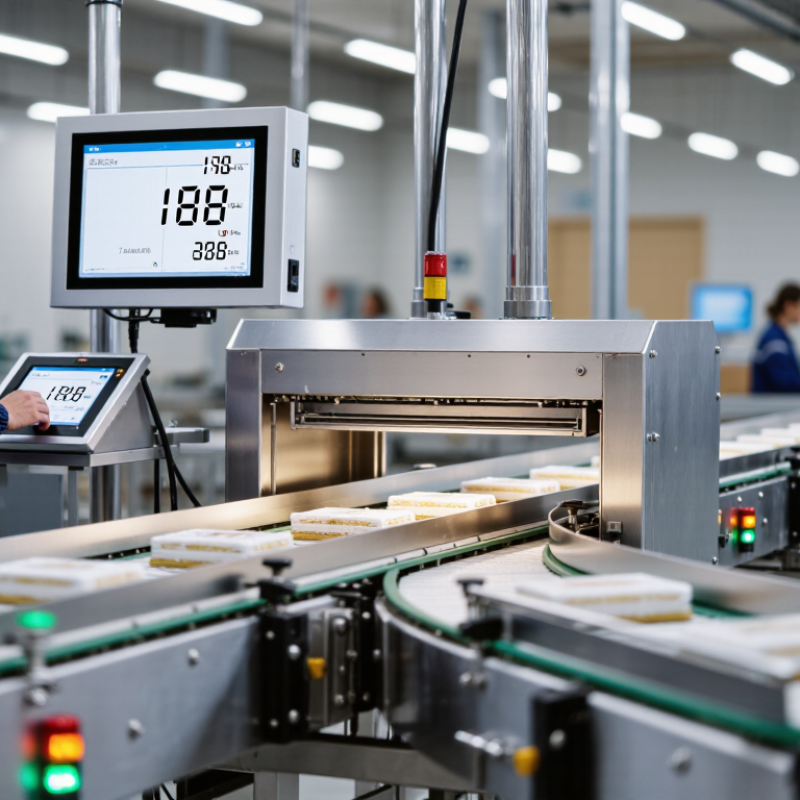
An online checkweigher weighs individual packages while they move along a production conveyor. Unlike a static scale, it checks products without stopping the line. A package passes over a short weighing platform, where a load cell detects its weight. The system’s controller compares that reading with a preset target and permitted limits. Packages outside those limits can trigger an alarm or be diverted by a reject device.
The process sounds simple. It isn’t always. Conveyor vibration, uneven spacing, product movement, and line speed can affect readings. Operators typically verify performance with test weights and routine checks, using procedures suited to the product and operating conditions. OIML R 51-1:2016 describes requirements for automatic catchweighing instruments, including systems that weigh individual loads in motion. That standard helps explain why a checkweigher is more than a scale on a conveyor.
Weight control also matters when products are packaged at scale. UNEP’s Food Waste Index Report 2024 estimates that 1.05 billion tonnes of food were wasted in 2022, across households, food service, and retail. A checkweigher cannot solve food waste by itself, and that figure does not measure checkweigher performance. Still, accurate readings can help manufacturers spot process drift, limit unnecessary overfill, and identify underweight packs before they leave the line. The results depend on careful setup and consistent monitoring.
Where Checkweighers Fit in a Production Line
An online checkweigher usually sits on the production conveyor after filling and before final packaging. At this point, each item can pass over a weighing section while moving. The system compares its measured weight with preset limits and can signal a reject device when a pack falls outside them. This placement helps teams spot filling variation before products are boxed or shipped.
The surrounding equipment matters. Products need steady spacing, and the conveyor must run at a speed the checkweigher can handle. A crowded belt or unstable container may affect readings. In a real line, even a small change in product shape can cause trouble. Position the reject mechanism close enough to remove the flagged item, then confirm it does so without disturbing the next pack. Keep weight records and check performance during routine production, not only during installation.
Tips: Leave room for access, cleaning, and test weights. Run representative products through the line before setting limits. Watch a full shift if possible; a setup that works for ten minutes may behave differently later. Don’t assume the first placement is perfect.
Business Benefits of Real-Time Weight Control
An online checkweigher measures each pack as it moves along the production line. Real-time weight data can reveal drift before it affects a full shift’s output. Operators may spot a filler running slightly heavy or recurring rejects after a conveyor adjustment. Timely corrections can reduce product giveaway, rework, and avoidable line interruptions. Small changes matter.
Tips: Set clear alert limits and review weight trends by product and line. Check that the system is properly installed, maintained, and verified with suitable test weights. A dashboard helps, but it does not replace trained operators or sound process checks.
Live records can also help teams compare batches, investigate repeated deviations, and plan maintenance using actual production patterns. For example, a gradual shift in readings during a busy morning may point to a process issue worth checking. Still, readings need context: packaging variation, vibration, and poor setup can affect results. Real-time control works best when staff respond consistently and document adjustments. A checkweigher cannot fix every source of variation, and some data may be messy at first. That is useful to notice, not ignore.
Why Choose an Online Checkweigher for Your Business? - Business Benefits of Real-Time Weight Control
| Business dimension | What real-time checkweighing does | Potential business benefit | Useful measure to track |
|---|---|---|---|
| Weight compliance | Checks each passing pack against configured weight limits and identifies products outside the acceptable range. | Helps teams detect underweight or overweight packs before they continue through the line. Applicable limits depend on the product and local regulations. | Out-of-limit packs; checkweigher verification and calibration records. |
| Product giveaway | Records individual weights and weight trends, allowing operators to identify when average fill is consistently above target. | Can support tighter control of excess fill when paired with suitable upstream adjustments and a validated target-weight strategy. | Average weight versus target; estimated excess product per batch. |
| Reject handling | Works with a reject device to divert products outside configured limits and can record reject counts or events. | Makes nonconforming products easier to separate for inspection, rework, or disposal, subject to the plant’s procedures. | Reject rate by reason; reject-device checks; confirmed reject events. |
| Production efficiency | Weighs products as they move along the production line, avoiding the need to weigh every pack manually at a separate station. | Provides in-line inspection and can reduce reliance on manual checks, depending on line layout, product handling, and operating procedures. | Line throughput; manual weighing time; stoppages associated with weight checks. |
| Process control | Displays weight results and trends so operators can investigate changes during a production run. | Supports earlier investigation of issues such as filler drift, inconsistent portions, or changes in product presentation. | Weight variation over time; time from trend alert to corrective action. |
| Traceability and reporting | Depending on the system configuration, stores weight results, counts, alarms, and production records for review or export. | Can make production investigations and record reviews more consistent when data is linked to the correct product, line, and time period. | Record completeness; report retrieval time; data linked to production batches. |
| Quality assurance | Applies configured checkweighing rules and provides results that can be incorporated into a quality-control plan. | Adds a repeatable in-line weight check; it complements rather than replaces other product-quality inspections. | Scheduled test results; documented responses to out-of-limit events. |
| Investment evaluation | Provides production data that can be compared with the costs of equipment, installation, integration, maintenance, and training. | Enables a site-specific business case based on measured changes rather than assumed savings. | Total ownership cost; measured product giveaway; labor and downtime changes; payback period. |
Results depend on product characteristics, line speed, equipment setup, operating procedures, and applicable regulations. Validate expected benefits using a production baseline and site-specific data.
Key Factors for Choosing an Online Checkweigher
Choosing an online checkweigher starts with the product and production line, not a catalogue specification. Record the lightest and heaviest packs, their dimensions, and the line’s real operating speed. A narrow tray may shift on a wide belt, while soft packaging can wobble as it passes over the weighing section. Fit matters.
Check that the stated weighing performance suits your product under actual conditions. Vibration from nearby equipment, belt speed, and uneven spacing can affect readings. Ask how the system handles rejected packs, and confirm that its reject mechanism works safely with your package type. Test it live. A short trial using your own products can reveal issues a demonstration unit may not show.
Also consider cleaning access, operator training, data records, and connection to existing line controls. In a dusty or washdown area, confirm that the enclosure and materials suit the cleaning routine. Service response and spare-part access matter when a line is stopped. One imperfect part of planning is estimating future product changes; teams often underestimate them. Leave room for new pack sizes, but avoid paying for capacity your line may never use. After installation, review sample checks and rejection data regularly, since performance can drift as belts wear or settings change.
Why Choose an Online Checkweigher for Your Business?
Key factors to evaluate when selecting an in-line checkweigher
The scores are illustrative planning ratings on a 1–5 scale, not industry benchmarks. Prioritize the factors that fit your products and production line. Confirm achievable weighing performance and throughput with product trials, and check that reject handling, line integration, cleaning requirements, and data reporting suit your operation.
Industries and Products That Benefit Most
Online checkweighers are especially useful for packaged foods, beverages, pharmaceuticals, cosmetics, and household liquids. These products move quickly through filling and packing lines, where a few grams of excess product can add up across thousands of units. An inline system weighs each pack and flags results outside the set range, helping teams spot drift before an entire run is affected. It is practical, though it cannot fix inconsistent filling equipment by itself.
The scale of food loss makes tighter process control worth attention. FAO’s The State of Food and Agriculture 2019 estimated that 13.8% of food was lost between harvest and retail. UNEP’s Food Waste Index Report 2024 estimated that 1.05 billion tonnes of food were wasted in 2022 at retail, food-service, and household levels. Checkweighing cannot solve those wider problems, but it can help processors identify avoidable overfills and underfills in individual packs. A bottle line, for example, can compare each filled bottle with its target weight while production continues.
Tips: Match the checkweigher’s speed and weight range to your actual line, then test it with real products. Include awkward packs, such as flexible pouches, in trials. Small packages can be surprisingly tricky. Review reject records regularly; a rising pattern may point to a filler issue, not a scale problem.

