Blog
How to Choose Water Treatment Equipment for Your Needs?
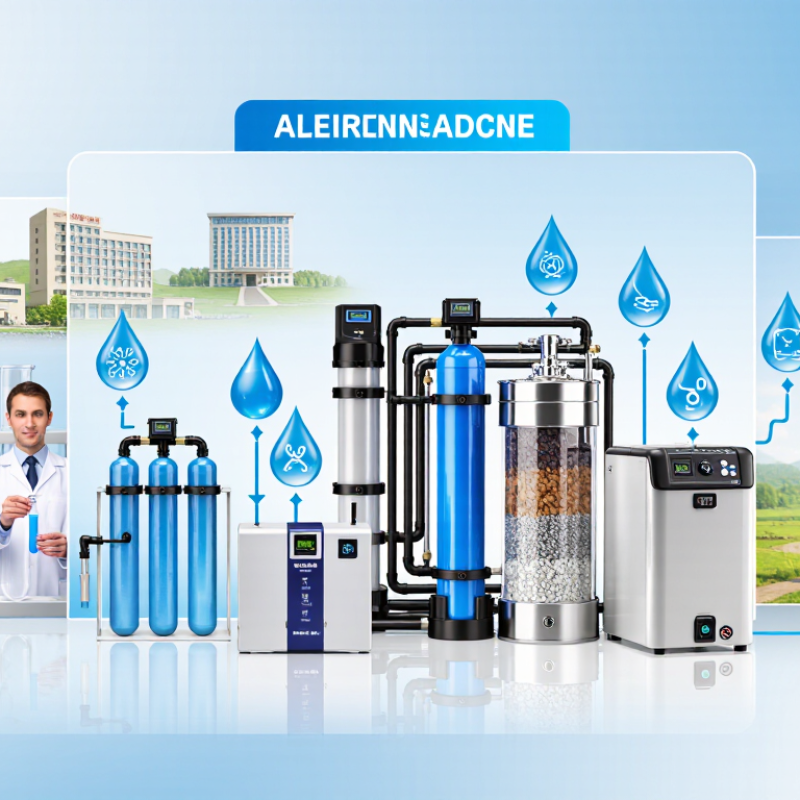
Choosing Water Treatment Equipment is not a matter of selecting the largest filter or the newest technology. It begins with understanding the water itself. A private well, hotel, factory, and municipal facility may require completely different solutions. Testing should identify hardness, turbidity, iron, pathogens, salinity, organic compounds, and other relevant contaminants. Without reliable laboratory results, equipment selection becomes guesswork.
Dr. Peter H. Gleick, co-founder of the Pacific Institute, stated, “Water is a basic human right, and access to clean water is a basic human need.” This principle gives equipment decisions a practical purpose: protecting health while using energy, chemicals, space, and money responsibly. Flow rate, peak demand, pressure, maintenance skills, available power, and wastewater disposal also deserve careful review. A reverse osmosis system may reduce dissolved salts, but it can waste water and require membrane replacement. A multimedia filter may clarify cloudy water, yet it cannot solve every chemical problem.
The right choice is rarely perfect. It is usually a balanced choice. Ask what must be removed, how consistently it must be removed, and who will maintain the system. Request performance data, certifications, service records, and total lifecycle costs from qualified suppliers. Check applicable local requirements before installation. Small details matter. A neglected prefilter can shorten the life of expensive equipment. An oversized system can increase operating costs without improving water quality. This guide offers a practical starting point, but professional testing and site-specific engineering remain essential. Mistakes happen. The goal is to identify them early, measure results honestly, and improve the system over time.
Define Your Water Quality and Treatment Objectives
Before choosing water treatment equipment, define what “better water” means for your property. A drinking-water plan differs from a process-water plan. Begin with a recent analysis from an accredited laboratory. Test hardness, iron, manganese, pH, dissolved solids, chlorine, and microbial indicators when relevant. Test the source water, not only the kitchen tap. Note odors, cloudiness, staining, and scale on fixtures. One sample can mislead. If the source changes seasonally, collect samples during different conditions.
Set measurable treatment objectives. For household use, you might reduce hardness, protect appliances, or improve taste. For commercial use, you may need a specific pH range, conductivity limit, or contaminant threshold. Write these targets down.
Flow rate matters. Calculate average demand, peak demand, and available pressure before selecting equipment. A system that treats slowly may fail during showers, cleaning, or production.
Do not choose equipment by contaminant name alone. Match the process to concentration, peak flow, contact time, maintenance needs, and waste-handling requirements. This is where many plans fail.
I would also inspect the installation space, drainage, electrical supply, and access for filter replacement. Leave room for testing and repairs.
No treatment system stays accurate without monitoring. Keep laboratory reports and maintenance records together. Recheck the water after installation.
If readings conflict with daily observations, pause and investigate. That pause is valuable.
Match Contaminants to Suitable Treatment Technologies
Choosing water treatment equipment starts with a laboratory report, not a product catalog. Testing comes first. The WHO and UNICEF 2023 Joint Monitoring Programme report found that 2.2 billion people lacked safely managed drinking water in 2022. Clear water is not necessarily safe water. Test turbidity, pH, hardness, nitrate, metals, microbes, and volatile compounds. Results can shift after heavy rain.
For sand, rust, and visible sediment, use screening, settling, or multimedia filtration. For bacteria and viruses, validated ultraviolet treatment or chlorination may work, but UV does not remove dissolved chemicals. Activated carbon can reduce taste, odor, and many organic compounds. It needs timely replacement. Hardness usually suits cation exchange. Nitrate, fluoride, and dissolved salts may require selective ion exchange or reverse osmosis. Reverse osmosis can produce concentrated reject water. This detail is often overlooked.
PFAS needs tighter verification. The U.S. EPA’s 2024 drinking-water regulation sets limits of 4 nanograms per liter for PFOA and PFOS. Do not assume ordinary carbon is adequate. Ask for contaminant-specific test data, contact time, membrane recovery, and certified performance under similar water conditions. The WHO Guidelines for Drinking-water Quality support health-based targets and independent risk assessment. Source water changes. A high-capacity unit can still fail when pressure drops or maintenance is skipped. Budget for repeated laboratory testing, because one sample rarely reveals the full risk.
Compare Equipment Capacity, Performance, and Compatibility
How to Choose Water Treatment Equipment for Your Needs?
Capacity should match real demand, not an optimistic average. Measure hourly flow, peak demand, storage volume, and seasonal changes. The WHO/UNICEF Joint Monitoring Programme reported that 2.2 billion people lacked safely managed drinking water in 2022. This pressure makes reliable sizing important. A unit rated at 10 cubic meters per hour may perform poorly if your peak reaches 14. Leave practical headroom, but avoid excessive oversizing. It increases capital and operating costs.
Performance must be measured with site-specific water data. Test turbidity, hardness, iron, organic matter, salinity, and microbial indicators before selecting equipment. WHO’s 2022 drinking-water guidelines recommend turbidity below 1 NTU for effective disinfection, where achievable.
Check removal rates, recovery, pressure, energy use, and reject-water volume. Compatibility matters too. Stainless steel, membranes, seals, and piping must tolerate the feedwater chemistry. My early sizing decisions focused too much on flow. That was a mistake.
Tips. Request verified test results, not only brochure claims. Compare capacity at your actual temperature and pressure. Confirm replacement intervals and cleaning requirements. Ask whether pretreatment is necessary. Check available floor space, drainage, power, and operator skills. A neat spreadsheet can still mislead. Pilot testing is wiser when water quality changes often. Record every assumption, then challenge it before purchase.
Assess Installation, Maintenance, Costs, and Operating Requirements
How to Choose Water Treatment Equipment for Your Needs?
Begin with the installation environment, not the equipment catalogue. Measure inlet pressure, flow variation, water temperature, drainage access, and available floor space. A system that fits on paper may block a maintenance aisle in practice. The U.S. Environmental Protection Agency advises assessing energy, chemical, and labor demands across the equipment’s life cycle. That matters because wastewater treatment can consume 30–40% of a municipality’s energy, according to EPA guidance.
Maintenance requirements should be visible before purchase. Ask how often filters, membranes, pumps, and sensors need servicing. Check whether technicians can replace parts without shutting down the entire process. The 2023 WHO Guidelines for Drinking-water Quality emphasize monitoring, verification, and operational control, not equipment alone. Keep calibration records. Test alarms. Small details prevent expensive surprises. Ideally, schedule one service inspection under realistic operating conditions.
Cost comparisons need more than the purchase price. Include installation, permits, electricity, chemicals, wastewater disposal, spare parts, training, and replacement intervals. The UN World Water Development Report 2024 notes that agriculture represents about 70% of global freshwater withdrawals, making efficiency increasingly important in water-intensive facilities. A low-cost unit may use more power or require frequent cleaning. That calculation is often missed. I would also challenge optimistic vendor estimates, because actual feed-water quality changes seasonally. Review three years of operating data when available, and leave room for uncertain flows, staffing gaps, and future compliance testing.
Verify Safety Standards, Certifications, and Supplier Support
Choosing water treatment equipment requires more than comparing flow rates and prices. Safety claims should be checked against recognized standards and current certification records. Ask for the exact model number, certificate scope, test date, and tested performance limits. A certificate for one configuration may not cover another.
Look closely at materials that contact water. Stainless steel, seals, tanks, and tubing can affect taste and contamination risks. Request laboratory reports for the pollutants you actually need to reduce. Do not rely on broad phrases such as “advanced purification.” They sound convincing but provide little evidence. Check whether testing used your water conditions, including hardness, temperature, and flow changes.
Supplier support matters after installation. Confirm commissioning procedures, operator training, maintenance intervals, spare-part availability, and emergency response times. Put these details in writing. A helpful supplier should explain failures without hiding behind technical language. During a site review, a missed drain connection or unclear alarm setting can cause serious operating problems. Small details matter.
I would also contact recent customers, if possible. Ask how quickly service teams responded and whether replacement parts arrived as promised. This step is easy to skip. It should not be. Certification proves compliance with specific requirements, not perfect performance in every facility. Your final choice should match verified evidence, local water data, staff capability, and realistic maintenance resources.

