

Blog
What Types of Aluminum Sunrooms Are Available?
An Aluminum Sunroom can extend living space with daylight, while its frame and layout affect comfort, upkeep, and appearance. Available options vary by season of use, roof shape, and connection to the house. Some homeowners want a sheltered place for mild-weather mornings. Others need a room that stays comfortable through colder months. That distinction matters.
Three-season rooms typically suit moderate conditions, while four-season designs often include more insulation and carefully specified glazing. Lean-to sunrooms attach beneath a simple sloping roof, making them a practical choice for many smaller patios. Gable and studio styles offer different ceiling lines and exterior looks. A Victorian design may add decorative details, though those details can require extra cleaning. Names vary among manufacturers, so labels alone may not reveal how a room performs.
A useful comparison looks beyond appearance. Check the frame finish, glass or panel specifications, ventilation, drainage, and the transition between the sunroom and the existing home. On a sunny afternoon, a large glass wall can make the space inviting; without suitable shading or airflow, it may also feel uncomfortably warm. No design solves every site challenge. Before choosing, compare written product specifications and ask an experienced installer how the proposed structure fits your home, climate, and intended use. A little caution helps prevent a bright new room from becoming an expensive space you rarely use.
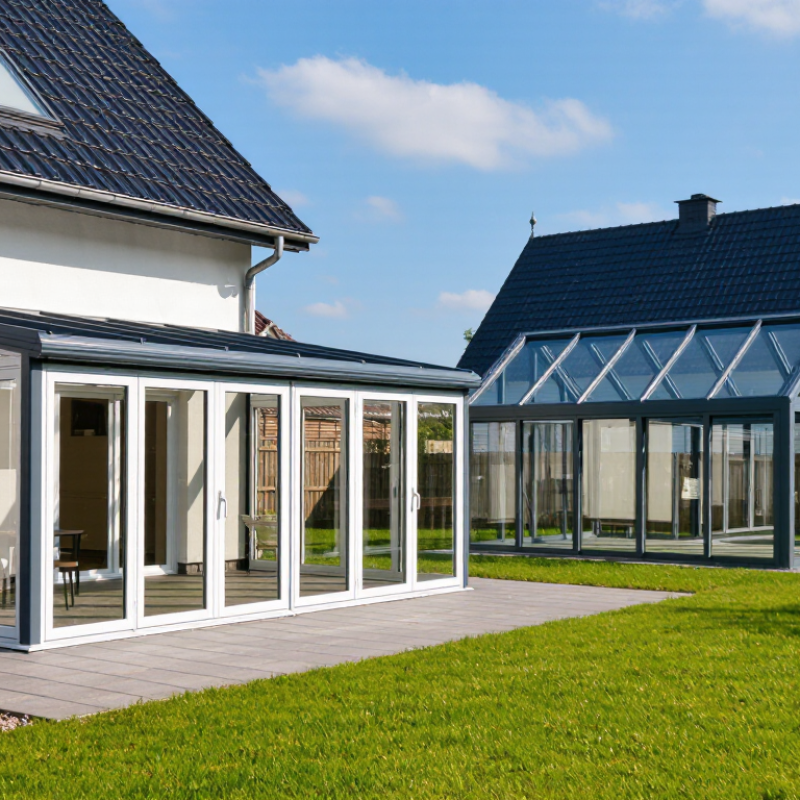
Aluminum Sunrooms Classified by Seasonal Use
Aluminum sunrooms are commonly classified by how many seasons they can comfortably serve: three-season rooms and four-season rooms. These are practical categories, not universal technical standards. A three-season room usually has aluminum framing, standard or lightly insulated glazing, and limited temperature control. It suits mild spring and autumn days, but can feel cold near glass in winter and hot in direct summer sun. A useful distinction. Check whether screens, operable windows, and shading match the room’s exposure.
Four-season rooms are designed for regular use throughout the year. They typically combine thermally broken aluminum frames, insulated glazing, well-sealed joints, and planned heating or cooling. The U.S. Department of Energy’s Energy Saver guidance estimates that windows account for about 25–30% of residential heating and cooling energy use, making glass performance an important design choice. A label alone tells little. Ask for glazing U-factor and solar heat gain coefficient, then consider orientation, local climate, and installation quality. A south-facing room may need different shading than a shaded porch. Even a well-specified room can disappoint if seals or ventilation are overlooked. That boundary is not always neat.
Three-Season Aluminum Sunrooms
What Types of Aluminum Sunrooms Are Available?
Three-Season Aluminum Sunrooms
A three-season aluminum sunroom extends living space for spring, summer, and fall. It typically uses aluminum framing with glass or screen panels, depending on the desired balance of light, airflow, and weather protection. On a mild morning, screened panels can let in a breeze and the sound of rain. Glass panels offer more shelter from wind, but they do not automatically make the room comfortable in winter.
Frame and glazing choices matter. Aluminum is sturdy and needs relatively little upkeep, though it can transfer outdoor temperatures indoors. Thermal breaks may reduce heat transfer, but performance depends on the full design, including the glazing and installation. Ask how the roof handles runoff, where condensation may collect, and whether vents can release trapped summer heat. Small details show up later.
A three-season room is not a sealed, year-round addition. Cold floors and chilly glass can make winter use unpleasant, even on sunny days. That limitation is easy to overlook when viewing plans. Match the enclosure to your local weather and intended use, and have the supporting base and drainage checked before work begins. A little extra planning beats discovering a damp corner after the first storm.
Four-Season Aluminum Sunrooms
A four-season aluminum sunroom is designed for regular use throughout the year, not just on mild spring afternoons. Its comfort depends on the whole enclosure: insulated glass, weather seals, roof construction, and thermally broken aluminum frames. A thermal break separates the frame’s interior and exterior surfaces, reducing heat transfer. Small details matter. A poorly sealed corner can invite drafts and moisture.
Look closely at the glazing and roof before choosing a design. Double-pane glass with low-emissivity coatings can help limit heat loss in winter and overheating in summer. In colder regions, an insulated roof may feel more comfortable than a largely glazed one, though it can reduce daylight.
There is a trade-off.
A sunny room can still feel chilly when the floor, frame, or glass is cold.
Heating and cooling also need planning. A sunroom connected to a home’s existing system may affect airflow, so a qualified installer should assess capacity and insulation. Ask how the room handles condensation, heavy rain, and local wind or snow conditions. Labels alone are not enough. Even a well-built enclosure may need blinds on bright afternoons or supplemental heat on cold mornings. That is worth considering before selecting the largest possible glass area.
Aluminum Sunrooms by Roof and Glazing Design
What Types of Aluminum Sunrooms Are Available?
Aluminum Sunrooms by Roof and Glazing Design
Roof design changes how an aluminum sunroom feels in different weather. A solid insulated roof can limit direct sun and reduce heat transfer, while a glass roof brings daylight overhead. Polycarbonate panels offer another option, with weight and light transmission varying by panel type. A suitable roof pitch and careful drainage help move rain away from the structure. Details count.
Glazing choices shape comfort and the view. Clear glass keeps garden colors vivid, while tinted or solar-control glazing can soften glare on bright afternoons. Double glazing may improve insulation compared with single glazing, but performance depends on the full assembly and installation. Operable windows can help with ventilation. Fresh air matters.
Many rooms combine a solid roof with glazed sides, balancing shade above with an open view outside. Others use roof glazing for a brighter, more conservatory-like space. The best fit depends on orientation, local weather, and how the room will be used. It is easy to overvalue a dramatic glass roof and overlook afternoon heat or cleaning access. Ask a qualified installer to assess drainage, framing, and glazing together before choosing.
Freestanding and Attached Aluminum Sunrooms
What Types of Aluminum Sunrooms Are Available?
Freestanding and attached aluminum sunrooms suit different yards and homes. An attached sunroom connects to an existing exterior wall, often near a kitchen or living room. That makes daily access easier, especially when carrying meals or garden tools. The connection needs careful planning: the wall, roof junction, and flashing should be checked for water entry and structural suitability. Small details matter. A poorly sealed seam can become a recurring maintenance problem.
A freestanding sunroom stands apart from the house, so its position can follow sunlight, views, or a quiet corner of the garden. It needs its own stable foundation and a frame designed for local wind and snow conditions. Drainage around the base matters, too. Utility runs may take extra planning. It is flexible, but not automatically simpler.
Tips: Before choosing, note where afternoon sun falls and where rainwater collects. Ask a qualified installer to assess the wall or proposed foundation. Bring photos and measurements to the discussion. Plans sometimes change after the site is examined, and that is worth allowing for.

