
Blog
China Top Material Handling Equipment Manufacturers?
China Top Material Handling Equipment Manufacturers? This question deserves more than a supplier list. China’s manufacturing base now supports conveyors, automated storage systems, forklifts, palletizers, sorters, and warehouse robots. The scale is substantial. The International Federation of Robotics reported 276,288 industrial robot installations in China during 2023. That figure represented more than half of global installations. It also signals a deep ecosystem for automation components and integration.
However, production volume does not automatically prove equipment quality. A reliable comparison should examine load capacity, uptime, safety controls, service coverage, spare-parts access, and software compatibility. The MHI Annual Industry Report repeatedly identifies automation, data visibility, and labor productivity as major supply-chain priorities. These priorities are visible in real warehouses. A shuttle system may move thousands of cartons daily, yet one weak sensor can stop an entire aisle.
This outline will assess leading Chinese manufacturers through practical criteria. It will consider product range, engineering experience, export capability, certifications, customization, and after-sales support. Public company information, technical documentation, customer references, and independent industry research should support each assessment. China’s National Bureau of Statistics and the IFR provide useful market context, but neither source ranks individual vendors. That limitation matters. No ranking is perfectly neutral. Some smaller manufacturers may offer excellent value but lack international visibility. Buyers should also verify testing results, installation records, and local compliance before signing a contract. Price is only one part of the calculation. A cheaper machine can become expensive when integration is poor.
Types of Material Handling Equipment Made in China
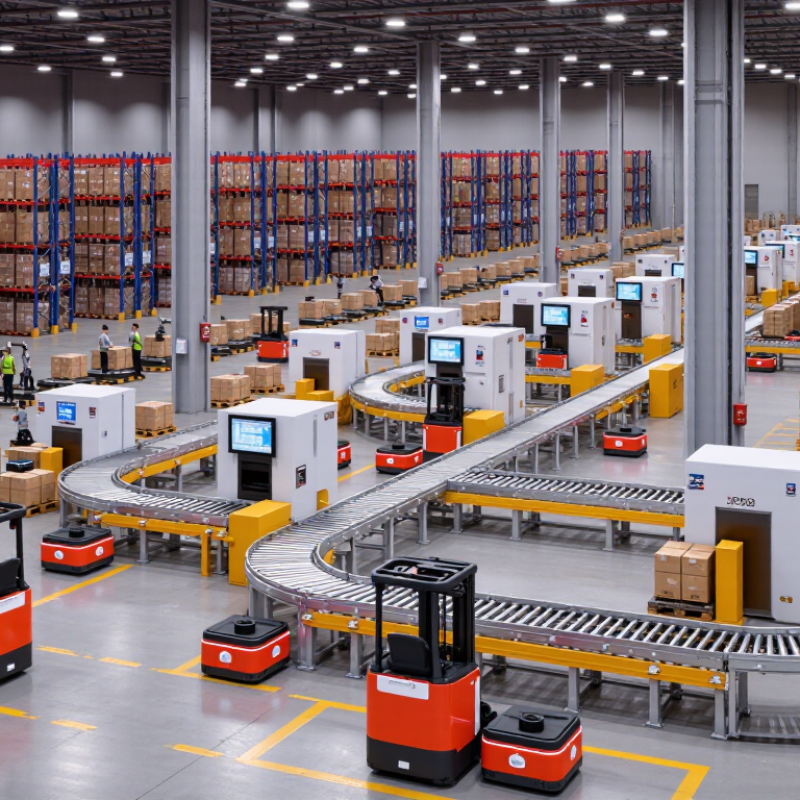
China produces a wide range of material handling equipment for warehouses, factories, ports, and construction sites. Common types include hand pallet trucks, electric pallet trucks, forklifts, stackers, order pickers, platform carts, and scissor lift tables. Conveyor systems are also widely made, including roller, belt, and chain conveyors. For heavier work, factories supply mobile cranes, hoists, loading ramps, and customized lifting platforms.
The right equipment depends on load weight, aisle width, floor condition, lifting height, and operating frequency. A compact electric stacker suits narrow warehouse aisles, while a counterbalance forklift handles outdoor pallets more effectively. Conveyors can reduce walking time, but poor layout may create new bottlenecks. Technical documents should show rated capacity, battery details, safety functions, dimensions, and testing procedures. Buyers should also check weld quality, hydraulic movement, brake response, and spare-parts availability. A low purchase price can become expensive after repeated downtime.
Tips: Request working videos and inspection records before ordering. Confirm the load center, not only the maximum weight. Measure doors, ramps, and turning areas carefully. Ask whether operators can receive practical training. Chinese manufacturers often accept customization, but excessive changes may complicate maintenance. Standard components are usually easier to replace. This point is easy to overlook.
Key Factors for Evaluating Chinese Equipment Manufacturers
China Top Material Handling Equipment Manufacturers?
Evaluating Chinese equipment manufacturers requires more than comparing prices. MHI’s 2024 Annual Industry Report found that 43% of supply chain professionals expected higher automation investment within two years. That demand makes technical verification essential. Check rated load, duty cycle, lifting speed, braking distance, and performance under repeated operation. Request test records from a loaded machine, not only laboratory photos. A factory audit should examine welding quality, electrical protection, software controls, and traceable component records. ISO 9001 certification helps, but it does not replace production evidence.
Tips: Ask for three customer references in similar industries. Review total cost over five years, including energy, maintenance, training, spare parts, and downtime. Confirm whether critical parts remain available after the warranty period. Independent inspection before shipment is sensible. It may feel excessive. Downtime is usually more expensive.
Reliable suppliers also explain limitations clearly. A claimed battery runtime may change with load, temperature, floor conditions, and operator behavior. Request data from standardized tests and real operating sites. The World Bank’s 2023 Logistics Performance Index emphasizes reliability, service quality, and shipment timeliness across supply chains. These principles apply to equipment procurement too. Evaluate response time, remote support, documentation quality, and corrective-action records. A polished sales presentation can hide weak after-sales systems. That possibility deserves attention.
Leading Categories of Chinese Material Handling Manufacturers
China’s material handling industry covers several strong manufacturing categories. Forklift manufacturers produce electric, diesel, and rough-terrain models for factories, ports, and distribution centers. Electric models suit indoor work, especially where low noise and clean air matter. Common capacities range from 1.5 to 10 tons.
Warehouse equipment forms another major group. Manufacturers supply pallet trucks, stackers, reach trucks, order pickers, and narrow-aisle vehicles. Some factories also develop automated storage and retrieval systems. These solutions connect conveyors, barcode scanners, and warehouse software. A careful buyer should check aisle width, pallet dimensions, battery charging time, and daily operating cycles.
Heavy lifting remains important. Chinese crane manufacturers offer overhead cranes, gantry cranes, hoists, and lifting platforms for industrial sites. Conveyor producers provide belt, roller, chain, and flexible systems. Each category requires different inspection points. Check weld quality, braking response, control accuracy, spare-part access, and operator training. Ask for load-test records and production documentation.
Details matter most. A 2-ton forklift may perform poorly on uneven floors or long shifts. A fast conveyor can still damage fragile packages. Low prices also deserve careful review. They may exclude installation, software integration, or after-sales support. No category is automatically superior. A reliable evaluation compares safety records, testing procedures, service response, and actual operating conditions. Some specifications look impressive on paper, yet field performance can reveal gaps. That possibility deserves honest attention.
Manufacturing Standards, Technology, and Quality Control
China’s top material handling equipment manufacturers compete through measurable standards, not low prices alone. Reliable factories commonly align production with ISO 9001 quality systems and relevant safety standards, including ISO 3691-1 for powered industrial trucks. The ISO Survey 2023 recorded more than 1.2 million ISO 9001 certificates worldwide. Yet certification alone proves little. A damaged pallet test or inconsistent weld can expose weak controls quickly.
Technology is changing factory expectations. The International Federation of Robotics reported 541,302 industrial robots installed globally in 2023. Chinese manufacturers increasingly apply robotic welding, automated guided vehicles, digital torque tools, and barcode-based traceability. These systems can reduce variation. They cannot replace skilled inspection. Production teams should verify load capacity, braking distance, mast alignment, battery performance, and emergency-stop response under realistic warehouse conditions.
Details matter. Inspectors may scan a component code beside a painted frame, then match it with material records and test results. Quality teams should retain calibration certificates, sampling plans, corrective-action records, and shipment photos. Independent testing strengthens credibility, especially for overseas buyers. However, factory audits sometimes examine prepared areas only. That limitation deserves attention. A better assessment includes unannounced checks, operator interviews, and repeat testing after equipment leaves the assembly line.
How to Select a Suitable Chinese Equipment Supplier
China Top Material Handling Equipment Manufacturers?
Selecting a suitable Chinese equipment supplier requires more than comparing prices. Start with the application, not the catalog. Define load capacity, lifting height, aisle width, floor condition, duty cycle, and local power requirements. A warehouse handling pallets may need different equipment from a steel workshop. Small details matter.
Ask for factory evidence, not only polished product images. Check production facilities through a live video call or an independent inspection. Request load charts, material specifications, test records, quality procedures, and export experience. The supplier should explain how each model fits your working conditions. Clear answers build trust. Vague promises do not.
I once saw a buyer choose the lowest quotation and overlook spare-parts availability. The equipment worked well, but a simple sensor caused weeks of delay. That mistake was expensive. Check response times, technician support, warranty limits, packaging methods, and replacement-part stock before signing. Ask for customer references in similar industries. Review the contract carefully, especially inspection, delivery, training, and after-sales duties. A small trial order can reveal communication problems early. It may not expose every weakness, though. Supplier selection still needs practical judgment.
China Top Material Handling Equipment Manufacturers? - How to Select a Suitable Chinese Equipment Supplier
| Equipment Category | Typical Rated Capacity | Typical Working Range | Suitable Applications | Key Supplier Selection Criteria | Documents and Evidence to Request |
|---|---|---|---|---|---|
| Manual Pallet Trucks | 2,000–3,000 kg | Fork lift height commonly 75–200 mm; fork lengths commonly 800–2,500 mm | Short-distance pallet movement, loading areas, warehouses, and retail facilities | Fork dimensions, steering effort, frame strength, wheel material, weld quality, and spare-parts availability | Load test report, dimensional drawing, material specification, warranty terms, and replacement-parts list |
| Electric Pallet Trucks | 1,500–2,500 kg | Travel distances typically up to several hundred metres per operating cycle; low-lift applications | Distribution centres, supermarkets, production lines, and frequent pallet transport | Battery chemistry, charging time, operating hours per charge, emergency stop design, controller quality, and serviceability | Battery and charger specifications, electrical safety test, cycle-test data, user manual, and after-sales response policy |
| Walkie Stackers | 1,000–2,000 kg | Lift heights commonly 1.6–4.5 m | Low- to medium-height pallet storage and light-duty warehouse operations | Mast visibility, residual capacity at maximum lift, turning radius, battery access, and stability under rated load | Load chart, stability test results, mast inspection records, risk assessment, and maintenance schedule |
| Counterbalance Forklifts | 1,500–5,000 kg for common warehouse models | Lift heights commonly 3–6 m; higher configurations are available | Indoor and outdoor pallet handling, manufacturing, logistics yards, and loading docks | Fuel or battery type, duty cycle, aisle width, ground conditions, residual capacity, operator visibility, and safety features | Rated-capacity plate, load chart, braking test, emissions data where applicable, operator manual, and inspection checklist |
| Reach Trucks | 1,000–2,500 kg | Lift heights commonly 6–12 m, depending on mast configuration | High-density racking and narrow-aisle warehouse storage | Aisle compatibility, residual capacity at height, mast deflection, camera or display systems, battery endurance, and operator ergonomics | Racking compatibility calculation, load chart, mast test report, battery performance data, and operator-training requirements |
| Warehouse Conveyors | Product load commonly 20–1,500 kg per metre, depending on design | Line length, speed, incline, and transfer points are project-specific | Cartons, totes, pallets, sorting, accumulation, and production-line transfer | Throughput calculation, conveyor speed control, noise level, guarding, emergency stops, sensor reliability, and integration capability | Layout drawing, capacity calculation, motor data sheet, control-system architecture, risk assessment, and factory acceptance test plan |
| Automated Storage and Retrieval Systems | Load capacity commonly 50–1,500 kg per storage position, depending on the system | Storage height and throughput are engineered for the building and inventory profile | High-density storage, controlled inventory, fulfilment centres, and production logistics | Space utilisation, storage density, throughput, software integration, system redundancy, fire protection, and lifecycle support | Concept design, throughput simulation, interface specification, software test plan, safety validation, and performance-guarantee terms |
| Automated Guided Vehicles | Common payload range 500–2,000 kg; heavier custom systems are possible | Travel speed, route length, navigation method, and charging strategy are site-specific | Repetitive pallet transport, factory logistics, warehouse replenishment, and line feeding | Navigation accuracy, obstacle detection, traffic management, battery charging, fleet software, cybersecurity, and manual recovery procedures | Site survey, route simulation, safety validation, communication protocol, battery-cycle data, and integration acceptance criteria |
| Dock Levelers and Loading Equipment | Rated capacity commonly 6,000–15,000 kg | Platform size, lip length, pit dimensions, and height range depend on the dock design | Truck loading bays, distribution centres, cold stores, and manufacturing facilities | Vehicle compatibility, structural load rating, weather protection, anti-runaway safety, maintenance access, and corrosion resistance | Structural calculation, hydraulic or mechanical test report, installation drawing, safety instructions, and preventive-maintenance plan |
| Racking and Storage Systems | Beam and bay capacity must be calculated from pallet weight, size, and storage configuration | Common warehouse configurations range from low-level shelving to multi-level pallet racking | Pallet storage, carton picking, archive storage, cold-chain facilities, and industrial warehouses | Load calculations, seismic conditions, forklift impact protection, corrosion protection, installation quality, and future expansion | Structural calculations, layout plan, load plaques, anchor specifications, installation inspection, and periodic-inspection guidance |
| Supplier Evaluation Dimension | Recommended Weight | What to Verify | Preferred Evidence |
|---|---|---|---|
| Technical Fit | 25% | Capacity, dimensions, duty cycle, operating environment, aisle width, and required throughput | Application questionnaire, engineering drawings, load charts, calculations, and site-survey report |
| Safety and Compliance | 20% | Guarding, emergency stops, stability, braking, electrical safety, operator protection, and destination-market requirements | Risk assessment, test reports, declarations of conformity where applicable, manuals, and inspection records |
| Manufacturing Capability | 15% | Production capacity, quality-control checkpoints, traceability, testing equipment, and subcontractor management | Factory audit, process-control plan, inspection records, production photographs, and sample test results |
| Reliability and Maintainability | 15% | Component life, preventive-maintenance intervals, spare-parts lead time, troubleshooting, and repair access | Failure-rate records, maintenance schedule, parts catalogue, service procedures, and reference installations without undisclosed branding |
| Total Cost of Ownership | 15% | Purchase price, shipping, installation, energy use, consumables, maintenance, downtime, and disposal costs | Five-year cost model, energy-consumption data, warranty schedule, service rates, and spare-parts quotation |
| Delivery and After-Sales Support | 10% | Production lead time, installation resources, training, remote support, local service coverage, and warranty response time | Project schedule, service-level agreement, escalation procedure, training plan, warranty terms, and delivery references |
Related Posts
-
Why Material Handling Solutions Matter for Global Buyers?
-
Why Choose Quality Material Handling Products?
-
How to Choose Industrial Material Handling Equipment
-
2026 Best Material Handling Products for Global Buyers?
-
How to Choose the Best Material Handling Products for Your Business?
-
2026 Best Material Handling Systems for Global Buyers?