

Blog
What Are the Top Types of Film Coating Machines?
A Film Coating Machine applies a thin, controlled layer to tablets, pellets, or other suitable products. The right design can improve appearance, protect a core, or support a measured release profile. The choice is not simply about machine size. Airflow, spray coverage, product movement, and drying conditions all shape the result.
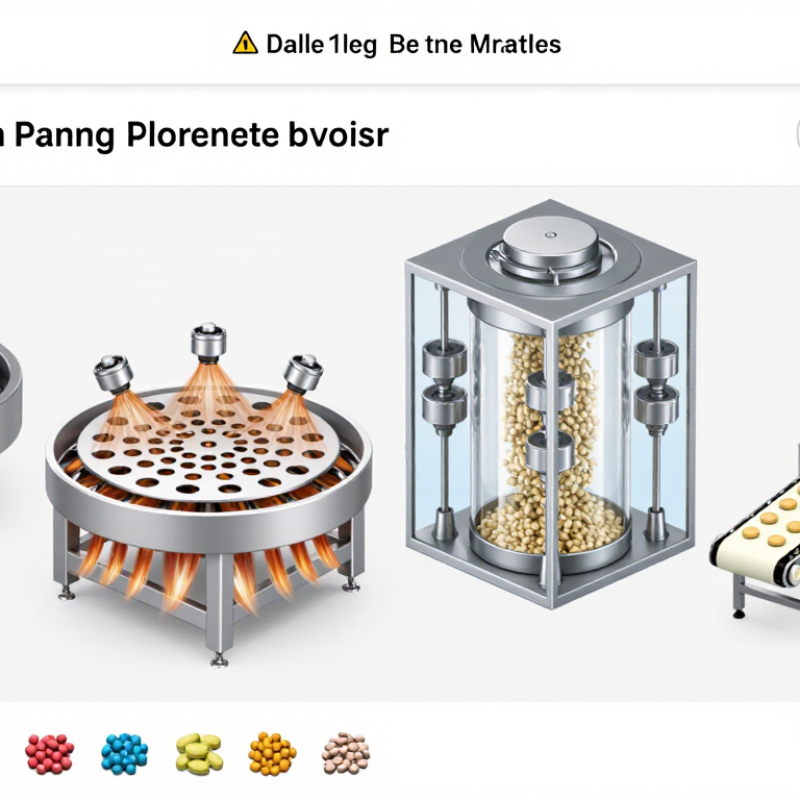
Common types include conventional solid-pan coaters, perforated-pan coaters, and fluid-bed coaters. Solid pans rotate the product while spray nozzles apply the coating. Perforated pans allow heated air to pass through the drum, which can support more controlled drying. Fluid-bed systems suspend small particles in moving air, making them useful for coating pellets and granules. Continuous coaters are another option for operations designed around steady product flow. The categories can overlap in practice.
Details matter. A tablet bed that moves unevenly may develop visible color variation, while excessive spray can leave droplets or tacky surfaces. A coating that dries too quickly may also behave differently than expected. Small changes count.
This guide compares the main machine types, their operating principles, and common applications. It also considers practical selection factors, including batch size, product shape, cleaning needs, and process control. No machine is best for every product. Terminology and configurations vary among manufacturers, so specifications should be checked against actual process requirements. That step is easy to overlook. A careful comparison gives manufacturers a more reliable starting point for choosing equipment and planning scale-up.
How Film Coating Machines Are Classified
Film coating machines are best classified by how they move products and apply coating, not by appearance alone. This distinction helps compare process control, capacity, and product handling. Batch systems process a measured load in one vessel and suit varied recipes or smaller production runs. Continuous systems move products steadily through coating and drying zones, supporting higher throughput but requiring stable input. Not every plant needs that complexity.
Another useful classification is by coating chamber. Conventional solid pans tumble tablets in a rotating bowl, while perforated pans allow more air to pass through the product bed. Fluid-bed coaters suspend particles in moving air and spray them as they circulate. They may suit pellets or granules, though particle shape and formulation affect results. Labels can overlap. A tidy category chart may not capture every machine’s actual capabilities.
Tips: Compare the product load, batch size, spray pattern, and drying airflow. Ask how evenly the machine coats tablets near the center of the bed. If possible, review trial data using your own formulation; catalog descriptions alone can leave important questions unanswered.
Conventional Pan Coating Machines
Conventional pan coating machines remain a practical choice for applying film to tablets and similar solid forms. A rotating metal pan lifts the product and lets it tumble back through the coating zone. Spray guns deliver a fine liquid mist, while heated air helps remove moisture. The basic idea is simple. The process is not.
In practice, operators monitor pan speed, spray rate, inlet-air temperature, and exhaust conditions together. If droplets are too large, tablets may develop rough patches or stick together. If drying is too fast, the coating can look uneven or lose adhesion. Baffles help move the tablet bed, but their placement and the pan load affect how consistently each tablet meets the spray. Small details matter.
These machines can suit products with established coating recipes and moderate production needs. Compared with perforated-pan systems, drying may be less direct, so cycle times can be longer for some formulations. That trade-off deserves attention. Scale-up also needs care: a larger pan does not always reproduce the same tablet movement or spray coverage. A useful trial records tablet-bed temperature, spray pattern, and visual defects, then changes one process setting at a time. It is tempting to blame the coating liquid first. Sometimes the real issue is poor circulation inside the pan.
What Are the Top Types of Film Coating Machines? — Conventional Pan Coating Machines
| Conventional Pan Configuration or Use | Typical Setup | Suitable Coating Work | Key Operating Considerations | Main Advantages | Important Limitations |
|---|---|---|---|---|---|
| Standard solid-wall coating pan | A rotating, solid-sided pan tumbles tablets or other suitable solid units. Heated process air is commonly directed over the bed, with humid air exhausted from the pan area. | General tablet coating, including sugar coating and some film-coating processes. | Pan speed, product-bed depth, inlet-air temperature, airflow, and coating-liquid application must be matched to the product and process. | Relatively straightforward construction; suitable for established coating processes and a range of batch sizes. | Airflow through the product bed is generally less uniform and less efficient than in a perforated-pan system, so drying and coating times may be longer. |
| Conventional pan with spray-assisted application | A spray gun or guns apply coating liquid to the moving bed. The pan remains a solid-wall conventional design; spray equipment is an added process configuration. | Film coating where controlled liquid distribution is required and the formulation and equipment are suitable. | Spray rate, atomization, gun position, pan loading, and drying-air conditions need to be balanced to avoid overwetting or uneven coverage. | Can provide more controlled application than pouring or ladling liquid onto the bed. | Spray performance depends on the pan’s mixing and drying conditions; it does not provide the through-bed airflow of a perforated pan. |
| Conventional pan for sugar coating | A solid-wall rotating pan is used with successive liquid applications and drying steps. Coating may involve syrup application, smoothing, and finishing stages. | Sugar coating of tablets or other suitable cores. | Process stages, liquid addition, bed movement, and drying must be carefully controlled to build a smooth, consistent coating. | Traditional, well-established approach for producing sugar-coated products. | Sugar coating is typically a multistage process and can require more time and operator attention than a simple film-coating operation. |
| Conventional pan used for polishing or finishing | A rotating pan gently moves already-coated units while a finishing material or polishing agent is applied as appropriate to the process. | Finishing or polishing of suitable coated tablets. | Gentle, even product movement is important to limit abrasion, chipping, or damage to the existing coating. | Can support a finishing step using the same general pan principle. | Polishing is a specific finishing use, not a substitute for the main coating and drying stages. |
| Note on equipment selection | “Conventional pan” describes a solid-wall rotating-pan design; application method and controls can vary. For film coating, compare the required batch size, airflow and drying needs, spray capability, process validation requirements, and the characteristics of the product. A perforated coating pan is a different design. | ||||
Perforated Pan Coating Machines
Perforated pan coating machines are widely used for applying thin, functional films to tablets. Their rotating drum has openings that let heated air pass through the tablet bed, supporting drying while tablets tumble. In practice, operators watch spray pattern, inlet and exhaust temperatures, pan speed, and tablet movement. A narrow spray plume can leave pale patches; excessive wetting may cause sticking. Small details matter.
The FDA’s 2011 Process Validation: General Principles and Practices guidance describes three validation stages: process design, process qualification, and continued process verification. This lifecycle offers a useful framework for assessing a coating machine, not just its purchase specifications. Check whether airflow and temperature readings are repeatable, and examine coating uniformity across samples from different bed locations. Then document the operating range that produced acceptable results.
Uniformity matters.
A glossy surface alone proves little. I would still question any setup judged mainly by appearance; tablet edges and difficult-to-reach areas can tell a different story. Temperature probes also need careful placement, or readings may not represent conditions inside the moving bed.
Fluidized Bed Coating Machines
Fluidized bed coating machines lift particles with a controlled stream of heated air, then apply coating liquid through spray nozzles. In practice, operators watch the powder move like a gently boiling surface. If airflow is uneven, particles may clump or receive patchy coverage. The method suits granules, pellets, and powders, with top-spray, bottom-spray, and rotor configurations serving different coating needs. Bottom-spray systems can provide repeated, even coverage on pellets, but they demand careful nozzle and airflow setup.
The IQVIA Institute’s 2024 Global Use of Medicines report projects global medicine spending will reach $2.3 trillion by 2028. This forecast is not a coating-machine market estimate, but it signals the scale of pharmaceutical production behind demand for dependable processing. For equipment selection, assess batch size, particle fragility, solvent or water use, cleaning access, and process monitoring. Record inlet temperature, airflow, spray rate, and product temperature during trials; small changes can alter drying and coating uniformity. The trade-off? More automation does not guarantee better coating. I would still question whether a proposed machine can reproduce results at full scale, rather than relying only on a neat pilot run.
What Are the Top Types of Film Coating Machines?
A qualitative comparison of common coating equipment configurations
Fluidized bed systems include top-spray, Wurster bottom-spray, and tangential-spray (rotor) configurations. Their typical uses differ: Wurster systems are commonly used for coating pellets, while top-spray systems are often used for granulation and particle coating. Perforated pan coaters are widely used for tablets. Ratings are qualitative (1 = lower typical fit; 5 = higher typical fit), not measured performance; suitability depends on the formulation and process.
Continuous Film Coating Systems
Continuous film coating systems move tablets through a controlled spray-and-drying process rather than stopping each batch for separate treatment. A perforated drum rotates the tablets while spray guns apply coating solution and heated air removes moisture. Operators monitor bed temperature, airflow, spray rate, and exhaust humidity. Small changes matter: too much spray can create sticky tablets, while excessive drying may leave a rough finish. The system suits high-volume production, but setup and process validation require care.
The market context is expanding. Grand View Research estimated the global pharmaceutical processing equipment market at about USD 8.4 billion in 2023, with projected annual growth of 6.5% from 2024 to 2030. This figure covers processing equipment broadly, not film coaters alone. Continuous systems can support steadier output and reduce interruptions between batches, but actual gains depend on formulation, tablet geometry, and line design. That is not automatic. A practical trial should track coating weight variation, tablet defects, and line stoppages across a full run. Even then, one weak point remains: a stable average can conceal uneven spray coverage at the drum edges. Operators should inspect samples from different positions, not just the discharge stream.

