Why Choose a Rubber Slitter Cutting Machine?
A Rubber Slitter Cutting Machine can help processors turn wide rubber sheets or rolls into strips with more consistent widths. In daily production, that consistency affects handling, downstream assembly, and material waste. A clean cut matters. So does a steady feed.
The right machine depends on the rubber, the required strip dimensions, and the pace of the operation. A firm sheet may behave differently from a soft, tacky compound. Operators should check the machine’s working width, cutting method, adjustment range, and compatibility with the material before comparing output claims. Small details matter.
Setup deserves equal attention. Correct blade alignment and feed tension can reduce uneven edges, while routine inspection helps identify wear before it disrupts a shift. Guards, clear operating instructions, and suitable operator training are also important parts of responsible equipment selection. Not glamorous, but necessary.
No single machine suits every workshop. A model that performs well on one compound may need different settings—or may not be the best fit—for another. Sample cuts and a discussion with a qualified supplier can reveal practical limits that a specification sheet may not show. This guide explores the main reasons manufacturers choose a Rubber Slitter Cutting Machine, what to evaluate before purchase, and where careful testing can prevent costly assumptions.
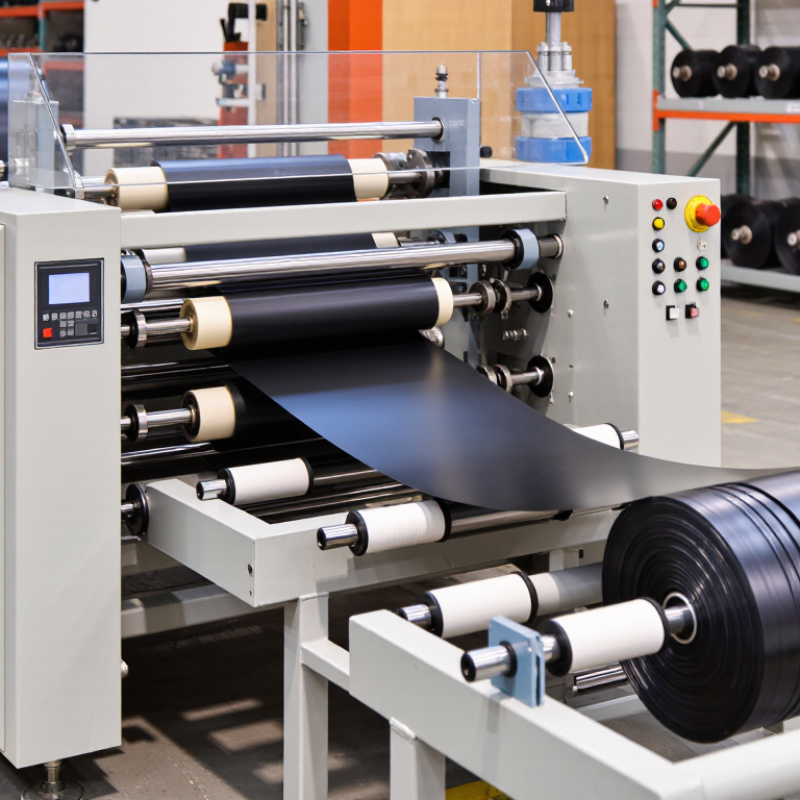
Rubber Slitting Basics: How Blades Divide Wide Rolls into Narrow Strips
Why Choose a Rubber Slitter Cutting Machine?
Rubber Slitting Basics: How Blades Divide Wide Rolls into Narrow Strips
A rubber slitter converts a wide sheet or roll into narrower strips. The roll unwinds under controlled tension, while positioned blades make continuous cuts along its width. Circular knives are common; blade spacing sets the strip width. Small setup errors matter. A few millimetres of drift can create strips that do not fit the next production step.
Rubber is elastic, so cutting it is not quite like slicing paper. Excessive pressure can compress the material, while a dull blade may drag, leave rough edges, or pull the sheet off line. Operators check blade sharpness, roll alignment, tension, and material thickness before a run. They also inspect the first strips, not just the finished roll. That check can catch uneven edges early.
The International Rubber Study Group’s World Rubber Industry Outlook placed global rubber demand near 30 million tonnes in 2023. That scale makes consistent roll conversion important across many industrial uses. But high output alone does not guarantee clean slitting. Rubber hardness, temperature, and reinforcement can all change how a sheet behaves. A setting that works well for one roll may need adjustment for the next. This is where experience counts—and where a quick visual check can still miss a subtle width variation.
Material Fit: Measure Hardness on the Shore A 0–100 Durometer Scale
Why Choose a Rubber Slitter Cutting Machine?
Material Fit: Measure Hardness on the Shore A 0–100 Durometer Scale
A rubber slitter cutting machine must suit the material, not just the required strip width. Shore A hardness gives a practical starting point: lower readings generally indicate softer, more easily indented rubber, while higher readings indicate firmer stock. A handheld durometer can provide a quick check on a clean, flat sample. Take several readings; one spot may not represent the whole roll.
Hardness alone does not predict a clean cut. Soft, tacky rubber may stretch or cling to a blade, while harder stock may need a different blade setup or feed rate. Thickness, reinforcement, temperature, and surface condition also matter. A reading near either end of the scale deserves extra care, since the test may be less informative for very soft or very hard materials. Check a production sample before settling on machine settings. It can be tempting to trust the number too much.
Tips: Let the sample reach room temperature, keep it flat, and press the durometer straight down without rocking it. Record the readings and sample location. Then compare a short trial cut with the finished strip: watch for ragged edges, compression, or stretching. Adjust one setting at a time, and note what changed. Measurement helps, but it is not the whole story.
Why Choose a Rubber Slitter Cutting Machine?
Material Fit: Measure Hardness on the Shore A 0–100 Durometer Scale
Typical hardness ranges vary by formulation and grade. Measure the actual rubber with a Shore A durometer before selecting slitting settings; hardness is one factor, alongside thickness, elasticity, and blade setup.
Tolerance Planning: Reference ISO 3302-1 Classes M1–M4 for Rubber Parts
Why Choose a Rubber Slitter Cutting Machine?
Tolerance planning starts with the finished rubber part, not the machine’s advertised cutting width. ISO 3302-1 defines dimensional tolerance classes for rubber products, including moulded-part classes M1 through M4. M1 generally represents tighter tolerances than M4. The right class depends on function, material, and manufacturing method. A slitter can produce consistent strips, but it cannot remove variation already present in the sheet.
Consider a 25-millimetre-wide strip used in a sealing assembly. A small width difference may affect fit, yet demanding the tightest class can increase inspection and production costs. Specify the relevant tolerance on the drawing, then confirm how measurements will be taken.
Rubber may stretch under a caliper, and temperature can change its dimensions. Details matter. During setup, check blade spacing, alignment, and a sample from the actual material batch.
ISO classes are useful references, not proof that every slitting process will meet a particular tolerance. That distinction is easy to overlook. A trial run may reveal that the material itself needs better control.
Machine Selection: Compare Roll Width, Slit Width, Speed, and Blade Type
Why Choose a Rubber Slitter Cutting Machine?
Machine Selection: Compare Roll Width, Slit Width, Speed, and Blade Type
Choosing a rubber slitter starts with the roll you actually handle, not the widest roll listed in a catalog. Measure the material across its full width, including any uneven edges, and leave room for loading and alignment. Small runs differ. A machine that barely fits today’s roll may restrict future jobs, but excess capacity can add cost without improving cuts. Check the minimum slit width too. A narrow strip may wander if the setup cannot hold the material firmly or guide it consistently.
Speed matters, but the rated maximum rarely tells the whole story. Ask how quickly an operator can load, adjust, and safely change rolls; these steps affect real output. Match the blade to the rubber’s thickness, hardness, and surface. Razor blades can suit thin stock, while shear-style blades may provide cleaner edges on thicker material. Crush cutting can be practical for some flexible materials, but test samples before committing.
Measure twice. Record edge quality, strip width, and waste across several cuts. It is easy to focus on speed and miss a small amount of width variation that causes trouble later. A sample run is useful, though it will not reproduce every production condition.
Performance Evaluation: Track Throughput, Edge Quality, and Scrap Rate
Why Choose a Rubber Slitter Cutting Machine?
Performance Evaluation: Track Throughput, Edge Quality, and Scrap Rate
A rubber slitter earns its place through consistent output, not a peak speed shown during a brief test. Track usable meters per hour across several shifts, including setup, roll changes, and minor stoppages. Keep material type, thickness, and target width consistent when comparing runs. Otherwise, the numbers can mislead.
Speed alone misleads. Check each slit edge under steady lighting. Look for fraying, compression marks, uneven widths, and rubber dust along the cut. Measure samples from the beginning, middle, and end of a roll with the same gauge. Small differences can matter when narrow strips must fit a later assembly. An occasional imperfect edge is worth recording, even if the machine usually performs well.
Scrap rate connects cutting quality to real operating cost. Weigh or measure rejected material, then note why it was discarded: startup trimming, width variation, damaged edges, or operator adjustments. Compare the rate with throughput; a faster run may create more waste. Repeat the evaluation with typical production materials, since one clean trial cannot represent every shift. No metric is perfect. Still, a simple log of speed, edge defects, and scrap gives teams a useful basis for maintenance and process changes.
Why Choose a Rubber Slitter Cutting Machine? - Performance Evaluation: Track Throughput, Edge Quality, and Scrap Rate | Cutting Method | Rubber Thickness | Hardness | Line Speed | Good Output | Maximum Edge Deviation | Scrap Rate |
| Conventional rotary knife slitting | 3 mm | 60 Shore A | 8 m/min | 7.6 m/min | ±0.8 mm | 3.2% |
| Rubber slitter cutting machine | 3 mm | 60 Shore A | 14 m/min | 13.5 m/min | ±0.4 mm | 1.4% |
| Conventional rotary knife slitting | 5 mm | 60 Shore A | 6 m/min | 5.7 m/min | ±1.1 mm | 4.1% |
| Rubber slitter cutting machine | 5 mm | 60 Shore A | 11 m/min | 10.6 m/min | ±0.5 mm | 1.8% |
| Conventional rotary knife slitting | 8 mm | 60 Shore A | 4 m/min | 3.8 m/min | ±1.4 mm | 5.0% |
| Rubber slitter cutting machine | 8 mm | 60 Shore A | 7 m/min | 6.7 m/min | ±0.7 mm | 2.5% |
| Evaluation basis: matched rubber stock, nominal 1,000 mm web width, and the same target strip width for each paired comparison. |
Note: These representative figures illustrate how to compare cutting methods; they are not certified test results. Good output is saleable material produced per running minute. Edge deviation is the maximum measured difference from the target strip width, and scrap rate is rejected material as a percentage of input material. Actual results depend on rubber compound, blade condition, setup, and inspection method.