
Sanitary Material Handling and Hygienic Equipment
2026 Top Types of MHE Equipment for Global Buyers
Choosing the right mhe equipment can shape warehouse safety, labor efficiency, and long-term operating costs in 2026. Global buyers now compare more than lifting capacity and purchase price. They examine energy use, aisle width, battery systems, maintenance access, operator visibility, and local service support.
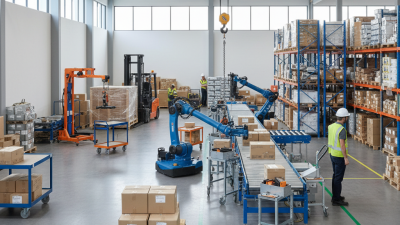
Small details matter. A reach truck may perform well in a narrow aisle, while an electric pallet truck may suit short-distance movement near loading docks. Counterbalance forklifts remain valuable for outdoor yards, especially when handling uneven surfaces or heavier loads. Conveyors, stackers, cranes, automated guided vehicles, and autonomous mobile robots can support faster workflows, but automation is not always the best answer.
The right choice depends on the application.
This guide reviews the top types of MHE equipment for global buyers, including their practical strengths, limitations, and typical use cases. It considers warehouse size, product weight, floor conditions, shift patterns, charging infrastructure, and expected growth. Safety features and operator training also deserve careful attention. Regional certification, emissions requirements, and installation standards may differ, so buyers should verify current local rules with qualified professionals.
Some comparisons remain imperfect. Supplier specifications may use different testing conditions, and advertised productivity can change on a busy warehouse floor. A machine that looks efficient on paper may create service delays if spare parts are difficult to obtain. Direct trials, site measurements, and transparent total-cost calculations often reveal more than a brochure. This overview offers a practical starting point, not a substitute for an engineering assessment.

MHE Equipment: Definition, Scope, and Role in Global Material Handling
2026 Top Types of MHE Equipment for Global Buyers
MHE Equipment: Definition, Scope, and Role in Global Material Handling
Material handling equipment, or MHE, supports the movement, storage, protection, and control of goods. It connects receiving docks, storage areas, production lines, and shipping zones. Common types include forklifts, pallet trucks, conveyors, stackers, cranes, shelving systems, and automated storage equipment.
The scope is wider than lifting alone. MHE may include manual tools, powered vehicles, warehouse software, safety systems, and loading equipment. Each solution serves a specific operating condition. A narrow aisle may require compact equipment. Heavy loads need verified capacity and stable handling. Fast order fulfillment often depends on conveyors or automated systems.
Safety comes first.
From my experience reviewing warehouse operations, buyers often focus too heavily on purchase price. That can hide costs linked to training, maintenance, energy use, floor damage, and spare parts. Local voltage, climate, aisle width, load shape, and operator skill also affect equipment performance. Global buyers should request clear specifications, inspection records, service procedures, and realistic delivery terms.
Some decisions remain imperfect. Automation may improve consistency but reduce flexibility during unusual orders. Manual equipment may cost less but increase physical strain. A practical assessment should measure travel distance, daily load cycles, floor conditions, and future expansion. The best MHE choice is not always the most advanced one. It is the equipment that performs reliably in the actual facility.
2026 Top Types of MHE Equipment for Global Buyers - MHE Equipment: Definition, Scope, and Role in Global Material Handling
A practical comparison of major Material Handling Equipment (MHE) categories, typical specifications, applications, and selection considerations
| No. | MHE Equipment Type | Primary Category | Typical Load Capacity | Typical Lift or Operating Range | Common Power Source | Typical Applications | Main Selection Considerations |
|---|---|---|---|---|---|---|---|
| 1 | Manual Pallet Truck | Horizontal Handling | 2,000–3,000 kg | Fork length commonly 1,150–1,220 mm; lift height generally up to 200 mm | Manual hydraulic operation | Moving palletized goods over short distances on level floors; loading and unloading at low volume | Floor condition, fork dimensions, pallet compatibility, steering effort, and total cost of ownership |
| 2 | Electric Pallet Truck | Powered Horizontal Handling | 1,500–3,000 kg | Low-lift travel; lift height commonly up to 200 mm | Rechargeable lead-acid or lithium-ion battery | Warehouse transport, retail distribution, order staging, and frequent pallet movement | Battery runtime, charging infrastructure, operator platform, travel speed, and aisle width |
| 3 | Walkie Stacker | Light-Duty Vertical Handling | 1,000–2,000 kg | Approx. 1.6–3.5 m lift height | Electric battery | Small warehouses, production areas, storage rooms, and occasional pallet stacking | Load center, mast type, residual capacity at height, floor quality, and maneuverability |
| 4 | Counterbalance Forklift | General-Purpose Lifting | 1,500–5,000 kg | Approx. 3–6 m standard lift height | Electric battery, LPG, diesel, or other internal-combustion fuel | Loading docks, manufacturing plants, outdoor yards, pallet storage, and container handling | Indoor or outdoor use, fuel emissions, tire type, load center, duty cycle, and operating surface |
| 5 | Reach Truck | High-Level Warehousing | 1,000–2,500 kg | Approx. 6–13 m lift height, depending on configuration | Electric battery | High-bay pallet racking, distribution centers, narrow warehouse aisles, and intensive storage operations | Rack height, aisle width, residual capacity, battery charging, visibility, and floor flatness |
| 6 | Order Picker | Piece-Picking Equipment | 900–1,500 kg platform or load capacity | Low-level to approximately 10–12 m, depending on type | Electric battery | Piece picking, e-commerce fulfillment, case picking, and high-density distribution operations | Picking height, operator protection, travel distance, ergonomics, productivity, and safety systems |
| 7 | VNA Turret Truck | Very Narrow Aisle Handling | 1,000–1,500 kg | Approx. 10–18 m lift height | Electric battery | Very narrow aisle warehouses requiring maximum storage density and high vertical utilization | Aisle width, guidance system, rack design, floor tolerances, operator training, and building height |
| 8 | Automated Guided Vehicle (AGV) | Automated Transport | 500–3,000 kg for common pallet-moving models | Usually floor-level transport; towing and lifting versions are available | Rechargeable battery with automated charging options | Repeated pallet transfer, production-line feeding, warehouse replenishment, and scheduled internal logistics | Navigation method, route stability, payload, traffic management, integration, safety zoning, and return on investment |
| 9 | Autonomous Mobile Robot (AMR) | Flexible Warehouse Automation | 300–1,500 kg for common mobile transport platforms | Primarily floor-level movement; top modules may support carts, shelves, or pallets | Rechargeable lithium-ion battery | Dynamic order fulfillment, goods-to-person systems, cart movement, kitting, and flexible material transport | Payload interface, fleet software, mapping, pedestrian interaction, charging strategy, and workflow variation |
| 10 | Conveyor System | Continuous Material Flow | Commonly 20–2,000 kg per unit load, depending on design | Fixed route; horizontal, inclined, or declined configurations | Electric motor drive | Carton transport, sorting, pallet movement, packaging lines, parcel handling, and production transfer | Throughput, product dimensions, accumulation requirements, layout, noise, maintenance, and controls integration |
| 11 | Dock Leveler | Loading Dock Equipment | Commonly 6,000–15,000 kg rated capacity | Bridges the vertical gap between dock and vehicle bed | Mechanical, hydraulic, or air-powered operation | Truck loading and unloading, distribution centers, manufacturing facilities, and cold-chain logistics | Rated capacity, lip length, dock height, vehicle range, weather exposure, safety barriers, and maintenance access |
| 12 | Mobile Crane | Heavy Lifting | Several tonnes to hundreds of tonnes, depending on crane class | Variable boom length and lifting height based on configuration | Diesel-hydraulic or electric-hydraulic systems | Construction sites, plant installation, heavy manufacturing, infrastructure projects, and outdoor lifting | Rated load chart, working radius, ground bearing capacity, boom configuration, transportability, and regulatory compliance |
Related Posts
-
Top Manual Handling Equipment For Safe Workplace Solutions?
-
Why Are Material Handling Systems Essential for Efficient Operations?
-
2026 How to Choose Manual Handling Equipment?
-

Top 5 Innovative Material Handling Solutions to Enhance Your Warehouse Efficiency
-

Why Is Handling Equipment Important for Global Buyers?
-
Top 10 Material Handling Solutions You Need to Know?