
10 Best Manual Handling Equipment for Global Buyers

Manual handling remains a daily risk across warehouses, factories, construction sites, and distribution centers. Workers still lift cartons, move pallets, pull loaded trolleys, and reposition awkward materials. The Health and Safety Executive reported 511,000 work-related musculoskeletal disorder cases in Great Britain during 2023/24. These cases caused 7.8 million lost working days and an estimated £7.1 billion in costs. The numbers are sobering.

This is where reliable manual handling equipment becomes more than a purchasing category. Pallet trucks, lifting tables, drum handlers, platform trolleys, hoists, and stackers can reduce excessive force and improve material flow. The International Labour Organization’s 2023 estimates recorded nearly 3 million work-related deaths worldwide, including deaths linked to occupational injuries and work-related diseases. That figure does not isolate manual handling, but it reinforces the need for practical risk controls, proper training, and safer workplace design.

Global buyers also face difficult choices. Equipment must match load weight, aisle width, floor condition, operating temperature, maintenance skills, and local safety requirements. A compact trolley may work well in a narrow storeroom but fail on uneven outdoor surfaces. A low-cost lifting table may appear attractive, yet spare parts and service support can decide its real value. No ranking can fit every site. This guide compares ten widely used equipment types through a buyer’s lens, combining practical usability, safety considerations, durability, and total ownership cost. Some recommendations remain debatable, because supplier quality and operator habits can change the outcome. Small choices matter.
10 Best Manual Handling Equipment for Global Buyers

Understanding Manual Handling Equipment and Its Main Applications

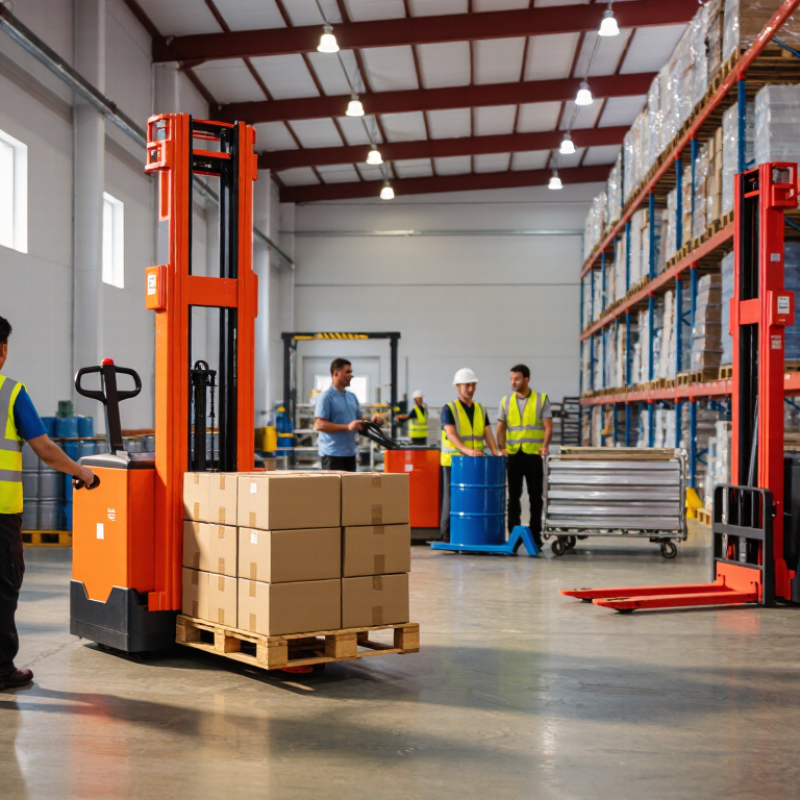
Manual handling equipment helps workers move, lift, position, and store materials without relying entirely on powered vehicles. Common options include hand trucks, platform carts, dollies, pallet jacks, lift tables, manual stackers, trolleys, and roller conveyors. Each tool serves a different task. A hand truck suits boxed goods on stairs, while a pallet jack works better on level warehouse floors.

Application depends on load weight, travel distance, floor condition, and available space. In a distribution center, pallet jacks move wrapped pallets between receiving and storage areas. Platform carts carry cartons through retail backrooms. Lift tables raise heavy components to waist height, reducing repeated bending during assembly. In hospitals, compact trolleys support linen and supply movement through narrow corridors. Construction teams may use material carts where powered equipment cannot safely enter.

Equipment selection requires more than checking maximum capacity. Wheel material affects movement on concrete, tiles, or uneven surfaces. Handle height, braking control, turning radius, and platform size also influence daily safety. A cart rated for 500 kilograms may still perform poorly on a sloped floor. That detail is often missed. Regular inspections should check wheels, fasteners, frames, handles, and load restraints. Workers also need practical training, not only written instructions. Even experienced operators can overload a trolley or pull it too quickly around a blind corner. Trial use in the actual workplace often reveals problems that product specifications cannot show.

Ten Essential Equipment Types for Lifting, Moving, and Positioning Loads

Manual handling equipment turns heavy, awkward loads into controlled movements. The right choice depends on load weight, shape, travel distance, floor condition, and lifting height. The ten essential types include hand trucks, platform carts, pallet jacks, lifting tables, chain hoists, lever hoists, manual stackers, drum handlers, material lifts, and mobile gantries.

Hand trucks suit boxed goods on short routes. Platform carts handle mixed cartons across smooth floors. Pallet jacks move loaded pallets, but uneven surfaces can cause sudden stops. Lifting tables raise materials to a safer working height and reduce bending. Chain hoists provide vertical lifting for fixed work areas. Lever hoists offer controlled pulling where overhead access is limited. Manual stackers position pallets on low storage levels. Drum handlers secure cylindrical containers during turning or pouring. Material lifts raise compact loads for installation work. Mobile gantries support removable lifting points, though their wheels require firm, level ground.

In real warehouses, operators check the load center before moving anything. A load may weigh less than the rated capacity yet remain unstable. Wheel brakes, handles, forks, chains, and locking pins need routine inspection. Buyers should verify test records, spare-part access, clear instructions, and operator training. Human factors matter too. A narrow handle or stiff wheel can encourage unsafe shortcuts. No checklist is perfect. Teams should record near misses and adjust procedures when equipment behaves differently than expected. Small details often decide whether a load moves smoothly or shifts without warning.

How to Match Equipment Choices With Workplace Handling Requirements

Choosing manual handling equipment starts with the task, not the catalogue. A warehouse moving boxed electronics needs different support from a workshop handling steel components. Check load weight, dimensions, lifting frequency, travel distance, floor condition, and available storage space.

A platform trolley suits stable boxes on smooth floors. A sack truck works better on stairs or narrow aisles. Use a pallet truck for palletised loads, while lift tables help position heavy items at a safer working height.

Match each option with real workplace behavior. Wheel size matters on cracked concrete. Handle height affects operator posture. Brake performance becomes critical on ramps.

For repeated lifting, consider spring balancers, roller conveyors, scissor lift tables, or vacuum lifters. For irregular loads, lifting clamps or adjustable dollies may provide better control.

Always verify rated capacity, load centre, construction materials, maintenance access, and operator training requirements. Capacity is not a suggestion.

In practical assessments, observe the full route. A trolley may carry the load safely but fail at a tight doorway. Measure turning radius and doorway clearance before ordering.

I once focused too heavily on maximum capacity and overlooked wheel resistance. The equipment worked, but operators avoided using it. That result was technically acceptable and operationally poor.

Trial the equipment with representative loads, record user feedback, and review near-misses without blaming individuals. Specifications guide the decision; workplace evidence should challenge it.

Global Safety Standards, Certifications, and Import Considerations

Global buyers should assess manual handling equipment through safety evidence, not appearance alone. The International Labour Organization reported 2.93 million work-related deaths in 2023, with many injuries linked to unsafe work conditions. Properly selected carts, pallet trucks, lifting tables, hoists, and clamps can reduce strain, but only when matched to load weight and workplace layout.

Certification requirements vary by destination. ISO 12100 supports machinery risk assessment, while EN 13155 addresses non-fixed load lifting attachments. ASME B30.20 may apply to below-the-hook lifting devices in some markets. Check rated capacity, stability, braking performance, pinch-point protection, and inspection instructions. A certificate is not a magic shield. Test reports should identify the exact model, materials, test method, and issuing laboratory. Vague documents deserve questions.

Importers should also verify country-of-origin markings, technical files, packaging strength, and local-language warnings. The United Nations Conference on Trade and Development reported that global merchandise trade exceeded 30 trillion US dollars in 2023, showing how widely equipment crosses borders. However, trade volume does not guarantee compliance. Confirm the correct customs classification before shipment, because similar-looking devices may receive different tariff treatment. Ask for spare-part availability and maintenance intervals. One practical lesson is often missed: a trolley that performs well on a smooth warehouse floor may fail on ramps, wet concrete, or uneven loading docks. Supplier claims should be checked against real site conditions.

10 Best Manual Handling Equipment for Global Buyers - Global Safety Standards, Certifications, and Import Considerations

Equipment Typical Application Typical Rated Capacity Main Construction Materials Relevant Standards and Safety References Common Certification or Technical Documents Import and Compliance Considerations
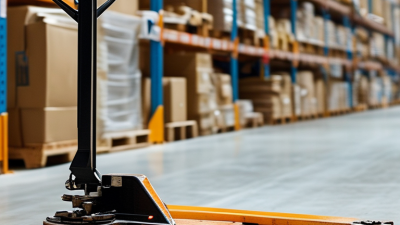
Manual Pallet Truck Moving standard pallets over short distances on level warehouse or production floors. Typically 2,000–2,500 kg; capacity depends on fork length, load centre, and wheel configuration. Powder-coated or painted steel frame; polyurethane, nylon, or rubber steering and load wheels. EN 1757-1 ISO 3691-5 ISO 5057 Safety markings and rated-capacity identification should be provided. Manufacturer declaration of conformity where applicable; load-capacity label; operating instructions; inspection and test records. Confirm fork dimensions, pallet entry clearance, wheel material, corrosion protection, and packaging strength. Check whether the destination market requires CE or another product-safety marking.
Platform Trolley Transporting cartons, containers, tools, and general materials inside warehouses, offices, workshops, and retail facilities. Typically 150–500 kg, depending on deck size, wheel type, and frame design. Powder-coated steel, stainless steel, or aluminium; non-slip deck options are common. General machinery and workplace-safety requirements; EN 1757 principles may be relevant for industrial trucks; ergonomic design should address handle height and braking. Rated-capacity label; user manual; wheel and brake specifications; material declaration for stainless or food-contact applications. Verify folded or assembled dimensions, carton volume, caster type, brake configuration, and whether the product is intended for food, healthcare, or cleanroom use.
Hand Truck / Sack Truck Moving boxes, sacks, cylinders, and other upright loads on stairs, ramps, and flat floors. Typically 100–300 kg on level ground; lower capacity may apply on stairs or uneven surfaces. Aluminium or tubular steel frame; solid, pneumatic, or puncture-resistant wheels. Applicable workplace-equipment and ergonomic-safety requirements; EN 1757 principles may be used as a reference for stability and handling; load restraint and stair-use instructions are important. Rated-capacity marking; operating instructions; stability information; wheel and tyre specifications. Declare capacity separately for level and stair use when relevant. Confirm wheel diameter, tyre inflation requirements, folded dimensions, and destination rules for rubber or pneumatic components.
Manual Hydraulic Stack­er Raising and positioning pallets, dies, boxes, and materials at low or medium working heights. Typically 400–1,500 kg with lift heights commonly around 1.0–3.0 m. Welded steel mast and chassis; hydraulic pump; steel or polymer load rollers. EN 1757-1 ISO 3691-5 ISO 3691-1 Requirements address stability, braking, steering, lifting, and warning information. Declaration of conformity where required; rated-capacity plate; stability and load charts; hydraulic inspection records; user manual. Check collapsed height, mast height, pallet-entry dimensions, turning radius, hydraulic oil type, and requirements for unloading from containers or trucks.
Manual Scissor Lift Table Ergonomic positioning of loads for assembly, packing, maintenance, and material transfer. Typically 150–1,000 kg; lift range often approximately 0.4–1.5 m. Steel scissor mechanism and platform; hydraulic or foot-pump lifting system; mechanical lowering control. EN 1570-1 EN ISO 12100 Safety requirements include guarding of pinch points, overload protection, stability, and controlled lowering. Declaration of conformity where applicable; rated-capacity label; test certificate; maintenance instructions; hydraulic-pressure and stability information. Confirm platform size, minimum and maximum height, wheel or fixed-base configuration, edge protection, and whether the product falls under lifting-equipment inspection rules in the destination country.
Manual Drum Handler Lifting, tilting, rotating, and transporting steel or plastic drums. Typically 200–350 kg per drum, subject to drum diameter, centre of gravity, and attachment design. Painted or galvanized steel frame; drum clamps, cradles, chains, or bands; steel or polymer wheels. EN ISO 12100 Risk assessment should cover drum retention, tipping, crushing points, and controlled rotation. Dangerous-goods handling rules may apply to the drum contents. Rated-capacity label; operating manual; attachment compatibility statement; inspection records; material and coating information. Specify drum diameter, height, rim profile, material, and filled weight. If drums contain hazardous substances, review UN packaging, SDS, ADR, IMDG, or local dangerous-goods requirements.
Manual Mobile Crane Short-distance lifting and positioning of machine parts, moulds, pumps, motors, and maintenance components. Typically 250–1,000 kg, with capacity often decreasing as boom reach increases. Welded steel frame and boom; manual hydraulic lifting system; hook, sling, or attachment point. EN 13157 EN ISO 12100 Lifting points, hooks, stability, rated capacity, and load-control devices require particular attention. Declaration of conformity where required; rated-capacity chart; proof-load or functional test report; hook and sling certificates; user manual. Check boom-position capacity, folded dimensions, counterweight requirements, lifting-point design, and local periodic inspection obligations for lifting equipment.
Manual Roller Conveyor Moving cartons, totes, pallets, and containers between workstations or during loading and unloading. Typically 50–500 kg per metre, depending on roller diameter, pitch, frame, and support spacing. Galvanized or painted steel frame; steel, aluminium, or polymer rollers; adjustable support legs. EN 619 EN ISO 12100 Safety design should address nip points, load retention, frame stability, and safe manual pushing forces. Load rating; assembly instructions; roller and bearing specifications; dimensional drawing; stability and support-spacing information. Confirm conveyor width, roller pitch, operating temperature, incline, floor loading, modular connection method, and whether the equipment is supplied as a complete machine or component.
Material Lift Cart Raising boxes, bins, tools, and components to ergonomic work heights without powered drive. Typically 80–500 kg; capacity depends on platform height and lifting mechanism. Steel or aluminium frame; hydraulic, mechanical screw, or spring-assisted lifting mechanism. EN 1570-1 EN ISO 12100 Safety considerations include platform stability, pinch-point protection, locking devices, and controlled lowering. Rated-capacity label; lift-height specification; inspection and maintenance instructions; conformity documentation where applicable. Verify platform size, lift stroke, load-centre limit, caster brakes, access for pallet trucks, and packaging protection for hydraulic or precision components.
Manual Tugger Cart Moving multiple carts or material trains through warehouses, assembly areas, and production sites. Typically 500–2,000 kg total train load, subject to tow-bar design, floor condition, and gradient. Welded steel chassis; swivel and fixed casters; mechanical coupling or tow-bar system. General industrial-truck and workplace-transport requirements; EN 1757-1 may be relevant to pedestrian industrial trucks; coupling, braking, visibility, and stability require risk assessment. Rated-load label; coupling and tow-bar specifications; operating manual; wheel-load data; inspection checklist. Declare maximum train length, turning radius, gradient limits, coupling compatibility, and emergency separation procedure. Confirm local rules for internal transport routes and pedestrian safety.
Buyer note: Standards and certification requirements vary by product configuration, destination market, intended use, and whether the equipment is classified as machinery, lifting equipment, or an industrial truck. Global buyers should request a technical file or equivalent documentation, rated-capacity information, risk assessment, user instructions, packaging details, country-of-origin data, and applicable conformity declarations before shipment.

Evaluating Durability, Maintenance Needs, and Total Purchase Value

10 Best Manual Handling Equipment for Global Buyers

Evaluating Durability, Maintenance Needs, and Total Purchase Value

Global buyers should assess more than the purchase price. A hand truck, platform cart, pallet truck, lift table, dolly, drum handler, stacker, order picker, conveyor, or material trolley must suit its daily workload. Check frame welds, wheel material, handle strength, rated capacity, and surface protection. Small details matter. A cart used on rough concrete needs larger, shock-resistant wheels. Indoor equipment may need quieter casters and tighter turning space.

Durability should be tested through practical use, not only supplier claims. Inspect wheel bearings, brake parts, hydraulic seals, fasteners, and moving joints. Ask how often these parts need inspection and whether replacements are available locally. Maintenance affects labor cost, downtime, and safety performance. We once underestimated cleaning time around exposed wheel housings. That mistake changed the real ownership cost. Cheap equipment can become expensive when spare parts arrive slowly or trained service workers are unavailable.

Compare total purchase value over several years. Include freight, packaging, installation, inspections, repairs, replacement parts, and operator training. A stronger frame may cost more initially, yet reduce damage to loads and floors. However, heavier equipment can increase manual effort. Not always. Buyers should review actual routes, load weights, floor conditions, storage space, and climate before choosing. A clear trial period and documented inspection records provide stronger evidence than a polished specification sheet.