Blog
What Are the 2026 Best Material Handling Products?
What Are the 2026 Best Material Handling Products? This question deserves more than a list of popular machines. Warehouses now demand safer movement, faster order processing, lower energy use, and dependable performance during long shifts. The strongest equipment must work in real facilities, not only in polished demonstrations. Forklifts, conveyors, pallet trucks, automated storage systems, and robotic solutions each serve different operational pressures.
This guide examines material handling products through practical evidence and professional judgment. It considers lifting capacity, control accuracy, battery performance, maintenance access, operator comfort, and integration with warehouse software. A product may look advanced, yet still create delays when sensors require frequent cleaning or replacement parts arrive slowly. Small details matter. A worn wheel can affect an entire workflow.
The evaluation also considers safety records, manufacturer support, training requirements, and total ownership costs. These factors help distinguish durable equipment from expensive technology with limited value. However, no ranking can fit every warehouse. A compact retailer may need flexible pallet movement, while a distribution center may prioritize automation and uptime.
Some decisions remain difficult. Newer systems often promise impressive efficiency, but their long-term results may not be fully proven. Real-world testing can reveal weaknesses that brochures ignore. This overview therefore balances technical specifications with workplace experience, documented performance, and practical limitations. Readers should compare these findings with their own layouts, workloads, budgets, and safety procedures before choosing equipment for 2026.
Definition and Scope of Material Handling Products in 2026
What Are the 2026 Best Material Handling Products?
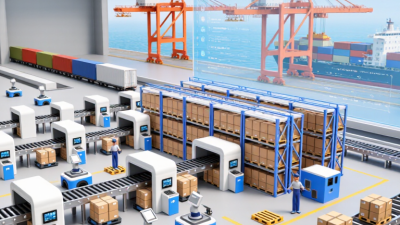
Material handling products in 2026 include equipment that moves, stores, protects, or tracks goods. The scope covers conveyors, pallet trucks, lifting tables, storage systems, bins, and industrial carts. It also includes sensors, fleet controls, and software that monitor location, weight, and equipment condition. A useful product must support a real workflow, not simply display advanced features.
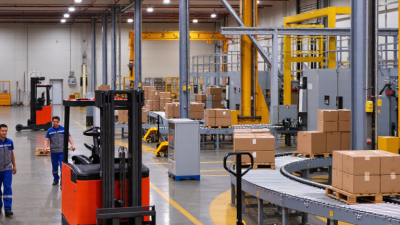
In a working warehouse, a small electric pallet truck may move cartons between receiving and shelving areas. A conveyor can reduce walking, while adjustable racks use vertical space more effectively. Connected sensors can warn technicians about unusual vibration or overloaded equipment. These details matter during busy shifts. They also influence training, maintenance schedules, floor strength, and emergency access.
The best products should match the load, aisle width, operating temperature, and staff experience. Safety documentation, rated capacity, service records, and clear controls are essential evidence of quality. Products should also support energy efficiency and repairable components where practical.
Yet automation is not always the right answer. A complex system may create delays when workers lack proper training or replacement parts arrive late. I have seen equipment perform well in trials but struggle near dusty loading doors.
This limitation deserves more attention. A careful evaluation should include daily use, cleaning, inspection, and failure response, rather than relying on specifications alone.
Key Evaluation Criteria for Choosing the Best Products
What Are the 2026 Best Material Handling Products?
Key Evaluation Criteria for Choosing the Best Products
In 2026, the best material handling product will not be the one with the longest feature list. Selection should begin with the task. Measure payload, travel distance, aisle width, operating hours, and floor conditions. A compact vehicle may outperform a larger model in narrow aisles, while a stronger unit may waste energy on lighter loads.
Safety deserves equal weight. Check visibility, braking performance, emergency controls, guarding, and operator training requirements. The 2023 MHI Annual Industry Report identified workforce shortages as a major supply chain challenge. Products that simplify safe operation can reduce training pressure, but they cannot replace supervision. That distinction matters.
Reliability should be tested under real working conditions. Review duty-cycle data, maintenance intervals, spare-part availability, and service response times. Deloitte’s 2023 Smart Manufacturing and Operations Survey found that 86% of manufacturers viewed smart manufacturing investments as important for competitiveness. Connectivity can support condition monitoring and usage analysis. However, more sensors also create more data, and poor data can mislead decisions.
Energy use must be measured per moved load, not only per hour. Compare battery life, charging time, and performance during peak demand. Ask for independent test evidence when possible. A perfect scorecard is unrealistic. I would leave room for human judgment, because product trials often reveal vibration, noise, or awkward controls that specifications miss.
What Are the 2026 Best Material Handling Products? - Key Evaluation Criteria for Choosing the Best Products
| Product Category | Typical Rated Capacity | Typical Working Height or Reach | Typical Operating Environment | Energy and Runtime Considerations | Safety and Compliance Priorities | Productivity Indicators | Best-Fit Selection Profile | Evaluation Priority |
|---|---|---|---|---|---|---|---|---|
| Electric Pallet Truck | Approximately 1,500–2,500 kg, depending on configuration | Floor-level transport; optional lift heights are generally limited | Short-distance movement in warehouses, loading areas, and retail backrooms | Battery size, charging time, opportunity charging capability, and energy use per operating hour | Emergency stop, controlled travel speed, braking performance, visibility, and operator training | Travel speed, turning radius, drawbar performance, control ergonomics, and uptime | Frequent horizontal transport where maneuverability and low operator effort are more important than stacking height | High for transport efficiency |
| Electric Counterbalance Forklift | Approximately 1,500–5,000 kg | Common lift heights range from about 3–6 m, with higher configurations available | Indoor facilities, loading docks, manufacturing areas, and selected outdoor paved surfaces | Battery chemistry, shift duration, charging infrastructure, battery-change requirements, and regenerative braking | Load backrest, overhead guard, seat restraint, stability design, warning systems, and rated-capacity compliance | Lift and travel speeds, turning radius, attachment compatibility, visibility, and aisle performance | Mixed indoor handling when low emissions and reduced noise are required | High for clean indoor operation |
| Internal Combustion Forklift | Approximately 1,500–8,000 kg or more for heavy-duty configurations | Common lift heights range from about 3–6 m | Outdoor yards, rougher surfaces, high-throughput docks, and applications requiring rapid refueling | Fuel consumption, refueling time, ventilation requirements, exhaust emissions, and maintenance intervals | Operator restraint, stability, pedestrian controls, exhaust management, and surface-condition suitability | Continuous-duty capability, gradeability, towing performance, and load-handling speed | Heavy loads and outdoor work where long operating periods and fast refueling outweigh indoor-emission concerns | High for outdoor heavy-duty use |
| Reach Truck | Approximately 1,000–2,500 kg | Often designed for pallet storage at approximately 8–12 m, depending on mast and load center | High-density indoor warehouses with smooth floors and narrow aisles | Battery capacity, charging strategy, lift-cycle energy use, and battery life under multi-shift operation | Load stability at height, mast visibility, tilt control, speed management, and rack-impact protection | Lift speed, residual capacity, aisle width, positioning accuracy, and operator visibility | High-bay storage where vertical space utilization and narrow-aisle productivity are key objectives | Very high for storage density |
| Very Narrow Aisle Truck | Approximately 900–1,500 kg | Often supports storage heights of approximately 10–15 m, subject to rack and floor design | Purpose-built high-density distribution centers with guided or controlled aisles | Battery capacity, charging access, automated guidance energy use, and shift availability | Wire or rail guidance, rack-end protection, interlocks, fall prevention, and aisle access control | Travel and lift coordination, positioning accuracy, aisle width, and pallet placement rate | Facilities seeking maximum cube utilization and consistent high-level pallet handling | Very high for high-bay density |
| Automated Guided Vehicle | Approximately 500–2,000 kg for common pallet-transfer applications | Usually floor-level transport; lift or conveyor interfaces may be integrated | Predictable, repetitive routes in warehouses and manufacturing facilities | Battery autonomy, automatic charging, fleet balancing, charging-queue control, and availability between cycles | Obstacle detection, protective fields, emergency stop, safe-speed control, route separation, and risk assessment | Trips per hour, route reliability, traffic management, system availability, and integration performance | Repetitive material flows with stable layouts, defined pickup points, and measurable transport demand | High for repeatable automation |
| Autonomous Mobile Robot | Approximately 100–1,500 kg, depending on platform and attachment | Generally floor-level movement with optional lift, cart, or shelving interfaces | Dynamic warehouse environments with changing routes, mixed traffic, and variable workstations | Battery runtime, automatic charging, fleet utilization, software energy management, and charging availability | People detection, obstacle avoidance, emergency stop, speed zoning, cybersecurity, and system validation | Navigation accuracy, mission completion rate, fleet coordination, deployment flexibility, and recovery time | Flexible internal transport where routes or workflows change more often than in fixed automation systems | High for flexible automation |
| Automated Storage and Retrieval System | Common pallet systems handle approximately 500–1,500 kg per load position | Storage heights can extend beyond 20 m in engineered high-bay installations | High-volume distribution, cold storage, manufacturing buffers, and controlled inventory environments | Regenerative drives, standby energy, climate-control impact, equipment availability, and maintenance access | Machine guarding, access control, emergency circuits, fire protection, load-position verification, and aisle protection | Storage density, pallet transactions per hour, retrieval accuracy, availability, and recovery performance | High-throughput operations requiring dense storage, traceability, and predictable inventory movement | Very high for throughput and density |
| Conveyor and Sortation System | Common pallet systems handle loads above 1,000 kg; carton systems are commonly rated below 100 kg per item | Primarily floor-level or elevated transfer; elevation depends on conveyor design | Fixed routes in distribution centers, parcel operations, manufacturing, and packing areas | Motor efficiency, variable-speed control, standby modes, accumulation logic, and maintenance energy demand | Guarding, pull cords, nip-point protection, lockout procedures, sensor redundancy, and emergency stopping | Items per hour, accumulation capacity, divert accuracy, line balance, and system availability | Stable, high-volume flows where repeatable movement and sorting justify fixed infrastructure | Very high for fixed-flow throughput |
| Order-Picking Vehicle | Common platform capacity ranges from approximately 1,000–2,000 kg, including operator and load | Low-level models serve floor and lower rack positions; high-level models can reach approximately 8–12 m | Piece-picking, case-picking, and multi-level fulfillment operations | Battery runtime, charging opportunity, lift-cycle demand, and energy use per completed order | Guardrails, platform protection, travel-speed control, pedestrian awareness, and fall prevention | Pick rate, travel distance per order, platform access, storage-location visibility, and ergonomic effort | Operations where human picking remains necessary but travel time and ergonomic strain must be reduced | High for fulfillment productivity |
| Warehouse Racking System | Typical pallet positions are engineered for approximately 500–1,500 kg per level, subject to design | Common installations range from approximately 4–12 m; higher systems require specialized engineering | Distribution centers, manufacturing storage, cold rooms, and reserve inventory areas | Primarily embodied energy, lighting impact, inspection needs, repair frequency, and adaptability to future layouts | Load notices, upright protection, anchoring, beam locking, floor capacity, seismic requirements, and inspections | Storage density, selectivity, accessibility, pallet-position utilization, and replenishment efficiency | Facilities needing safe, scalable storage with an appropriate balance between density and direct access | Very high for space utilization |
| Warehouse Management Software | Capacity is measured by transactions, locations, users, and connected equipment rather than physical load | Not applicable; coordinates inventory and material flows across operating zones | Warehouses requiring inventory accuracy, task control, traceability, and system integration | Server and device energy demand, cloud or on-site architecture, network efficiency, and hardware lifecycle | User access control, audit trails, data integrity, cybersecurity, backup, and integration governance | Inventory accuracy, order-cycle time, task interleaving, dock-to-stock time, and system uptime | Operations seeking measurable control of inventory, labor, equipment, and fulfillment performance | Very high for operational visibility |

Note: The figures are representative planning ranges rather than product specifications. Final selection should be validated against load dimensions, load center, floor conditions, aisle geometry, rack design, duty cycle, local safety regulations, integration requirements, total cost of ownership, and service capability.
Top Material Handling Product Categories and Their Applications
What Are the 2026 Best Material Handling Products?
Top Material Handling Product Categories and Their Applications
The strongest 2026 material handling products will solve specific workflow problems. They will not simply add more technology. A practical warehouse review should examine conveyors, pallet trucks, stackers, automated storage systems, mobile robots, and lifting equipment. Conveyors suit repetitive carton movement between picking and packing zones. Pallet trucks support short-distance transport across busy floors. Stackers work well in narrow aisles and moderate-height storage areas.
Automation deserves close attention. MHI’s 2024 Annual Industry Report found that 83% of supply chain professionals planned to increase automation investment within five years. Automated storage and retrieval systems can improve space use and reduce walking time. Mobile robots can carry totes between storage and workstations. However, poor slotting can make an expensive system slower. That risk is easy to underestimate.
Safety and data quality should guide product selection. The International Federation of Robotics reported 541,302 industrial robots were installed worldwide in 2023. This figure shows strong automation demand, but industrial robots need controlled work zones and reliable integration. Lifting equipment remains valuable for heavy loads, especially where flexible product movement matters more than full automation. Sensors, load indicators, and maintenance records can reduce preventable failures. Still, data does not replace operator judgment. A rushed decision based on a sales forecast may age badly. The best category depends on load weight, travel distance, aisle width, worker skill, and future volume. Small pilot tests often reveal problems that spreadsheets miss.
2026 Innovations Improving Safety, Efficiency, and Automation
What Are the 2026 Best Material Handling Products?
The strongest 2026 material handling products will make work safer before making it faster. Advanced vision systems can detect a misplaced pallet, a leaning load, or a person entering a restricted aisle. Wearable sensors can also flag awkward lifting patterns before pain becomes an injury. The U.S. Bureau of Labor Statistics continues to identify overexertion and bodily reaction among leading causes of workplace injury. That makes ergonomic design a practical investment, not a cosmetic feature.
Automation is becoming more measurable. The MHI 2025 Annual Industry Report found that 83% of surveyed supply chain professionals planned to increase technology and innovation investment. Meanwhile, the International Federation of Robotics reported 541,302 industrial robots installed worldwide in 2023. For warehouses, the useful products will include autonomous mobile platforms, smart conveyors, machine-vision scanners, and software that coordinates them. They should reduce walking, waiting, and repeated manual handling.
The weak point is integration. A fast robot still fails when inventory data is inaccurate. Poorly trained workers may also bypass safety alerts during peak shifts. That gap matters. In real facilities, I would test emergency stops, pedestrian routes, battery charging, and system recovery before measuring productivity. Safety must remain observable at floor level. MHI’s data shows strong investment intent, but investment alone cannot fix unclear procedures, weak maintenance, or unrealistic performance targets. Human judgment still matters.
How to Select the Right Material Handling Products for Each Facility
Choosing the best material handling products in 2026 starts with the facility, not the catalog. A narrow warehouse may need compact pallet racks, low-profile lift equipment, and mobile carts. A busy distribution center may benefit from conveyors, barcode-enabled picking tools, and adjustable workstations. Measure aisle widths, ceiling height, floor strength, load weights, and daily movement before comparing features.
Safety and maintenance should guide every decision. Check rated capacities, braking systems, guardrails, emergency controls, and operator visibility. Products must fit real work patterns, including peak-hour congestion and frequent product changes. A conveyor that performs well at 500 units per hour may create bottlenecks when packaging sizes vary. Test it under ordinary conditions.
Talk with operators before purchasing. They notice awkward handles, poor reach distances, and noisy equipment faster than a spreadsheet does. Review maintenance access, replacement-part availability, training needs, and energy use. Digital monitoring can reveal idle time, repeated jams, or uneven workloads, but data is only useful when collected consistently. Keep a small pilot area.
The cheapest option can become expensive after repairs, delays, and injuries. Still, the most advanced system is not automatically the right one. A facility may need simpler equipment with stronger flexibility. Recheck assumptions after installation, because real traffic rarely matches the original floor plan.
Related Posts
-
Why Choose Material Handling Products for Global Sourcing?
-
Why Choose Quality Material Handling Products?
-
2026 Top Types of MHE Equipment for Global Buyers
-
10 Best Material Handling Equipment Suppliers Worldwide
-
Why Is Handling Equipment Important for Global Buyers?
-
How to Choose Industrial Material Handling Equipment