What Are the Best Material Handling Products in 2026?

In 2026, the best material handling products will be the ones that solve a specific operational problem—not simply the newest machines on the market. A busy distribution center may need conveyors and autonomous mobile robots, while a smaller warehouse may gain more from pallet jacks, lift tables, and well-planned shelving. The right choice depends on load size, travel distance, floor conditions, staffing, and available maintenance support. Details matter.

Supply-chain scholar Martin Christopher describes a supply chain as “the network of organizations that are involved, through upstream and downstream linkages, in the different processes and activities that produce value in the form of products and services in the hands of the ultimate consumer.” That perspective helps explain why equipment choices affect more than movement. They can influence order flow, worker effort, inventory accuracy, and delivery speed. Still, no product fixes a poorly designed process by itself.

This guide compares leading product categories for 2026, including forklifts, conveyors, storage systems, ergonomic equipment, and automated solutions. It considers practical factors such as capacity, flexibility, safety features, energy use, and ongoing service needs. Some facilities may benefit from automation; others may find it too costly or complex. That is worth admitting. The strongest investment is usually the one that fits real daily work, even when it looks less impressive in a showroom.
What Are the Best Material Handling Products in 2026?

Understanding Material Handling Products and Their Role in 2026

Material handling products are the equipment and systems that move, store, protect, and track goods inside a workplace. In 2026, they range from hand carts and pallet jacks to conveyors, lift tables, storage racks, and mobile robots. Their role is practical: move a carton across a busy floor with less strain, or keep pallets accessible without blocking an aisle. Small details count. Wheel size, handle height, and turning clearance can matter more than a product’s headline capacity.

Choosing equipment starts with the actual task, not a trend. Measure loads, travel distances, aisle widths, floor conditions, and how often items move. A conveyor may speed up a steady packing line, while a cart suits changing routes and mixed orders. That matters. Match rated capacity to real loads, and consider operator visibility, brakes, guarding, and maintenance access. Where digital tracking or sensors are used, confirm that staff can interpret alerts and keep the system working. A plan can look neat on paper and still fail at a tight corner; observing a normal shift often reveals the awkward turn, uneven floor, or staging area nobody accounted for.

Key Criteria for Evaluating Material Handling Products

Choosing material handling products starts with the work they must do, not a catalog feature list. Measure load weight, dimensions, travel distance, turning space, and how often each item moves. A cart rated for a 300-pound load on smooth concrete may struggle on a ramp or cracked floor. Small details matter.

Check rated capacity against the heaviest realistic load, not the average one. Inspect wheels, handles, brakes, welds, and pinch points. Ask whether operators can steer and stop the equipment without twisting or reaching awkwardly. Test it on the actual route, including doorways and floor joints. It should feel stable.

Material choice should match exposure to moisture, dust, cleaning chemicals, or temperature changes. Compare maintenance needs, replacement-part access, and downtime, not purchase price alone. Confirm dimensions fit existing racks, lifts, and vehicles. A higher capacity rating is not automatically better if the unit is bulky. I would record problems during a short trial; small recurring hassles are easy to overlook.

Major Categories of Material Handling Equipment

Material handling equipment is easier to compare by function than by price alone. Storage systems include shelving, pallet racks, and bins. They keep goods accessible and help use floor space efficiently. A narrow aisle may save room, but it can also limit access for larger vehicles. Small details matter.

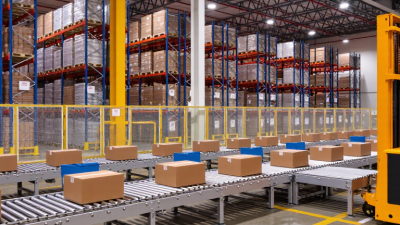
Transport equipment moves materials between work areas. Hand pallet trucks and carts suit short, flexible routes. Forklifts handle heavier loads, while conveyors move repeated items along fixed paths. A conveyor can reduce carrying, but it may not suit changing layouts. That trade-off is easy to miss.

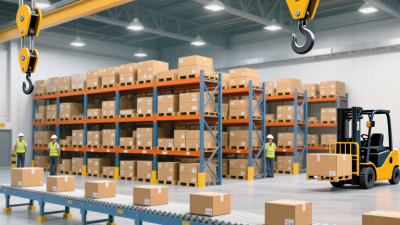
Lifting and positioning equipment includes hoists, cranes, and lift tables. These tools raise loads or bring work to a safer, more convenient height. Automated guided vehicles and robotic systems can support repetitive movement, but they need clear routes and careful setup. Fit comes first. The best category depends on load weight, shape, travel distance, and handling frequency. Teams should also consider floor conditions, operator training, and maintenance access. A system that looks efficient on paper may feel awkward during a busy shift. Walk the route. Observe where goods wait, turn, or require manual adjustment before choosing equipment.

Emerging Technologies Shaping Products in 2026

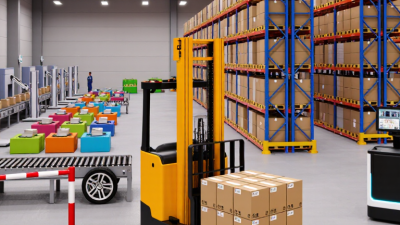
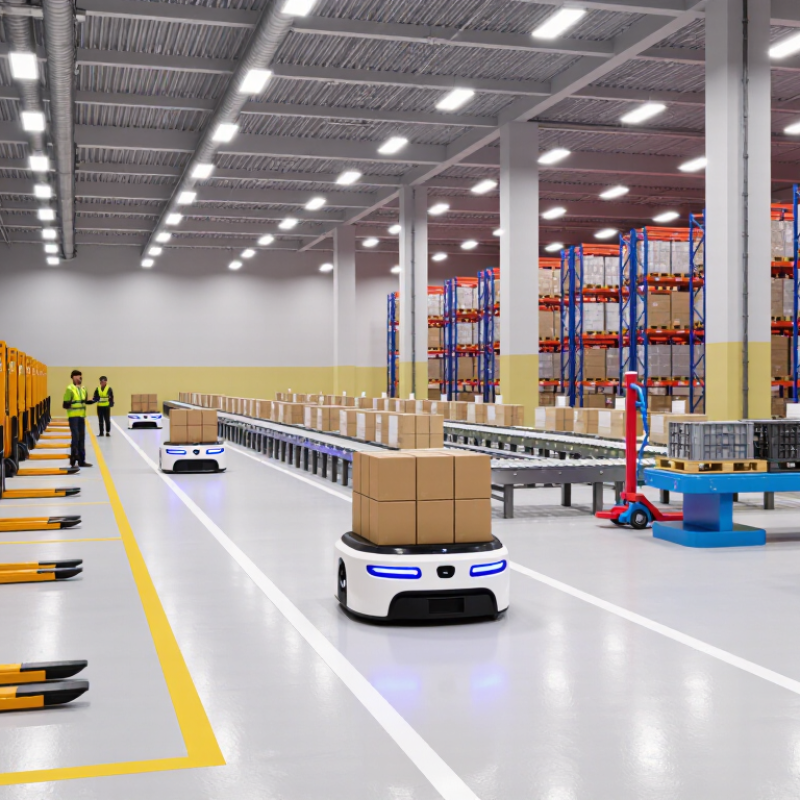
Material-handling products in 2026 are becoming more connected, adaptive, and automation-ready. MHI’s 2024 Annual Industry Report, produced with Deloitte, found that 55% of surveyed companies planned to increase supply-chain technology investment. That spending is moving beyond fixed conveyors toward autonomous mobile robots, smart sensors, and software that coordinates equipment in real time. The shift is practical: a robot can reroute around a blocked aisle, while sensors flag unusual vibration before a conveyor stops.

Robotics are expanding, but adoption needs context. The International Federation of Robotics reported 541,302 industrial robot installations worldwide in 2023, with 4.28 million robots operating globally. Those figures cover many industries, not material handling alone. Still, they show the scale of the automation ecosystem supporting picking, palletizing, and movement of goods. Small details matter. A poorly mapped corner can slow a fleet.

Artificial intelligence and digital twins are also shaping next-generation products. A digital model can test a new picking route before workers and equipment are moved. AI can help forecast congestion or match jobs to available machines, provided the underlying data is dependable. That caveat is easy to overlook. In a real warehouse, labels change, loads vary, and wireless signals drop. Automation can improve flow, but it cannot make a flawed process disappear.

How to Match Products to Operational Needs

What Are the Best Material Handling Products in 2026?
How to Match Products to Operational Needs

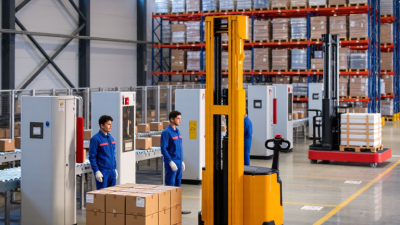
The best material handling product depends on what moves, how often, and across which surfaces. Map each route, load size, lift height, and handoff before comparing equipment. Hand pallet trucks suit short trips on smooth floors; powered pallet trucks reduce pushing over longer routes. For frequent vertical movement, compare lift tables or stackers with the required height and load capacity. Fit matters more than features.

Safety and throughput belong in the same assessment. The U.S. Bureau of Labor Statistics reported 2.6 million nonfatal workplace injuries and illnesses in private industry in 2023. That broad figure cannot identify handling risks at a particular site, so observe tasks directly. Note tight turns, uneven thresholds, repeated reaches, and queues at loading points. Then check turning radius, braking, handle position, and service access. A product that clears a specification sheet may still slow a cramped aisle.

Tips: Measure aisle width with loads in place. Test equipment on the actual floor, not just a showroom surface. Ask operators what feels awkward; their feedback may expose a mismatch your checklist missed.

What Are the Best Material Handling Products in 2026? - How to Match Products to Operational Needs

Operational need Suitable product Typical capability Best-fit environment Key selection checks
Move palletized loads over short distances Manual pallet truck Common rated capacities are approximately 4,000–5,500 lb; capacity varies by model. Loading areas, small warehouses, and occasional pallet moves on smooth floors Pallet entry dimensions, fork length, floor condition, turning space, and operator push distance
Reduce manual effort for frequent horizontal pallet transport Powered pallet truck Many models handle roughly 4,000–8,000 lb; travel distance and duty cycle depend on battery and configuration. Distribution centers and production areas with repeated pallet movements Load rating, battery runtime, charging arrangements, ramp limits, pedestrian traffic, and training requirements
Lift pallets to low or medium storage heights Walkie stacker Typical capacities are about 2,000–4,000 lb, with lift heights and residual capacity varying by model. Small warehouses, back rooms, and light-duty storage aisles Required lift height, load center, aisle width, floor quality, mast clearance, and whether the operator walks or rides
Store pallets in narrow aisles at height Reach truck Common rated capacities are approximately 2,500–5,500 lb; capacity decreases at greater lift heights and load centers. Indoor warehouses using high-bay pallet racking and relatively narrow aisles Rack height, aisle geometry, mast height, turning clearance, floor flatness, and capacity charts at working height
Handle varied loads and transfer goods between areas Counterbalance forklift Common warehouse models are rated around 3,000–8,000 lb; actual capacity depends on load center, attachment, and lift height. Loading docks, manufacturing sites, and operations needing versatile pallet handling Indoor or outdoor use, fuel or charging access, attachment effects, turning radius, tire type, and operator certification
Pick individual cases or items from elevated shelving Order picker Designed to raise an operator and picking platform; platform and load limits are model-specific. Piece-picking warehouses with multi-level shelving Picking height, aisle width, platform capacity, fall-protection procedures, travel speed, and pedestrian separation
Move cartons or totes along a fixed, repeatable route Conveyor system Roller and belt systems are configured for defined item sizes, weights, speeds, and throughput; there is no single universal capacity. Packing lines, sortation areas, and facilities with steady material flows Item dimensions and weight, peak throughput, layout, accumulation needs, guarding, noise, and access for maintenance
Automate repeatable transport while retaining flexible routes Autonomous mobile robot (AMR) Payloads commonly range from a few hundred pounds to over 2,000 lb, depending on platform and attachment. Facilities with recurring point-to-point movement and changing or shared work areas Payload and cart interface, route traffic, floor condition, network coverage, charging, safety assessment, and system integration
Improve ergonomic access to work surfaces or containers Lift table or scissor lift table Available load ratings vary widely, from several hundred pounds to several thousand pounds. Assembly, packing, loading, and maintenance tasks with repeated height changes Rated load, platform size, travel range, cycle frequency, pit or ramp requirements, guarding, and pinch-point protection

Capacity figures are indicative ranges, not specifications for a particular unit. Verify the equipment data plate, load chart, site conditions, applicable safety requirements, and task-specific risk assessment before selection.