China Top 10 Material Handling Equipment Suppliers?
Choosing the right material handling partner can influence warehouse speed, worker safety, and long-term operating costs. In a busy distribution center, one delayed conveyor or poorly matched forklift can disrupt an entire shift. This guide introduces China’s top 10 material handling equipment suppliers and examines what separates reliable manufacturers from attractive but risky alternatives.
Dr. James A. Tompkins, a recognized supply chain and logistics expert, wrote, “The goal of material handling is to reduce, combine, rearrange, or eliminate unnecessary movement.” That principle remains practical today. Strong suppliers should offer more than catalog products. They should understand pallet sizes, aisle widths, load weights, floor conditions, and peak-season pressure. Product testing, engineering support, spare parts, and service response also deserve close attention.
The ranking considers manufacturing capability, product range, customization, export experience, certifications, technology, and customer support. It covers forklifts, pallet trucks, stackers, conveyors, racking systems, automated storage, and warehouse software. Evidence matters. Factory visits, installation records, technical documents, and customer feedback can reveal more than polished brochures.
No list is perfect. Supplier strengths can vary by region and application. A low purchase price may hide higher maintenance costs. A sophisticated automated system may also exceed a smaller warehouse’s needs. Readers should treat this overview as a practical starting point, not a final buying decision. Careful site analysis still matters most.
What Is Material Handling Equipment?
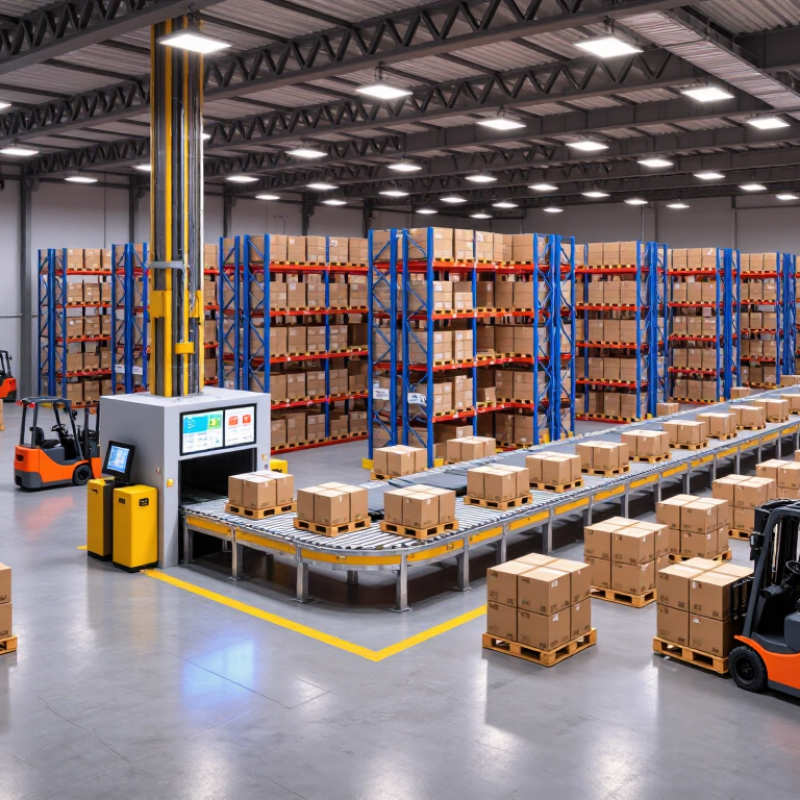
Material handling equipment includes the tools used to move, store, protect, and control materials. Common examples include forklifts, conveyors, pallet trucks, cranes, hoists, storage racks, and automated guided vehicles. These systems support receiving, production, order picking, and dispatch. They do not simply move boxes. They shape warehouse safety, speed, space usage, and labor demands.
The boundary is not always neat. Storage racks may be fixed equipment, while mobile robots connect storage with transportation. The Occupational Safety and Health Administration reports about 35,000 serious injuries and 85 deaths linked to powered industrial trucks each year in the United States. That figure makes equipment selection a management decision, not only a purchasing task. MHI’s 2024 Annual Industry Report also identifies automation, data analytics, and artificial intelligence as growing supply-chain priorities. However, technology alone cannot repair poor layouts or weak training. That is an uncomfortable limitation.
Tips: Start with material weight, travel distance, aisle width, floor condition, and lifting frequency. Check capacity labels before operation. Measure noise, charging needs, maintenance access, and emergency routes. Grand View Research continues to track strong global growth in the material handling equipment market, but market forecasts remain assumptions, not guarantees. Review local safety rules and supplier documentation. A practical pilot often reveals problems that a spreadsheet misses.
How China’s Material Handling Equipment Industry Is Structured
China’s material handling equipment industry is built in layers rather than around a single supplier group. The top ten suppliers usually cover forklifts, warehouse vehicles, cranes, conveyors, storage systems, and automated equipment. Some focus on high-volume standard machines. Others serve ports, factories, cold storage, or e-commerce warehouses. This division creates strong specialization.
Manufacturing clusters are common near major industrial and logistics regions. They connect component makers, system integrators, software teams, and service providers. A forklift supplier may source motors, controllers, batteries, and hydraulic parts from different provinces. Large suppliers often provide complete warehouse projects. Smaller firms may deliver faster customization. In my experience, installation quality can matter as much as the machine itself. A precise conveyor still fails when floor levels, sensors, or loading patterns are poorly checked.
The market also has clear supplier tiers. Leading manufacturers invest in testing, safety controls, export documentation, and technician training. Mid-sized suppliers compete through flexible designs and shorter delivery times. Local factories often offer attractive prices, but quality records can vary between production batches. That point deserves more attention. A polished showroom proves little. Buyers should inspect load tests, spare-part availability, maintenance response, and software compatibility. Product certificates help, yet they should match the actual model and working conditions. Some rankings also overlook service coverage after installation. That weakness can distort any “top ten” list.
Top 10 Material Handling Equipment Suppliers in China
China’s top ten material handling equipment suppliers are increasingly judged by more than production volume. Buyers now compare lifting capacity, control accuracy, energy use, service response, and spare-parts availability. The strongest suppliers usually cover forklifts, conveyors, automated storage systems, stackers, pallet trucks, and warehouse software. Field experience matters. A machine that performs well in a showroom may struggle with dust, uneven floors, or heavy seasonal demand.
Industry data shows why this market is expanding. The International Federation of Robotics reported 276,288 industrial robot installations in China during 2023. This growth supports demand for automated transport, pallet movement, and integrated warehouse control. MHI’s 2024 Annual Industry Report also found that many supply-chain leaders continue increasing technology investment, despite economic uncertainty. These figures do not prove every supplier is reliable. They only show a strong market direction.
When comparing the top ten suppliers in China, buyers should verify factory testing, load-cycle records, operator training, and local maintenance coverage. Ask for measurable evidence. Useful indicators include:
- equipment uptime
- battery performance
- safety inspection results
- average repair response time
Some suppliers still present unclear technical claims, and that deserves careful review. A lower purchase price can become expensive when sensors fail, software integration stalls, or replacement parts arrive late. Supplier rankings should therefore combine certified quality, practical engineering experience, transparent documentation, and long-term service capability.
Key Products and Technologies Offered by Chinese Suppliers
China’s leading material handling equipment suppliers now offer more than forklifts and pallet trucks. Their portfolios commonly include electric forklifts, reach trucks, conveyors, automated storage and retrieval systems, stacker cranes, and warehouse software. Lithium-ion batteries support faster charging and quieter indoor operation. Telematics can record battery health, travel speed, impacts, and maintenance needs.
Automation is becoming central. Autonomous mobile robots move totes between storage zones and picking stations. Vision sensors help vehicles identify pallets, people, and floor markings. Warehouse control systems connect conveyors, robots, scanners, and inventory software. The International Federation of Robotics reported 276,288 industrial robot installations in China during 2023, representing about 51% of global installations. That figure shows strong automation capability, but it does not guarantee reliable warehouse performance.
Site testing still matters. A supplier should measure aisle width, floor flatness, payload, cycle time, charging access, and emergency stopping distances. China’s logistics technology market also benefits from large domestic demand. The China Federation of Logistics and Purchasing reported total social logistics costs of about 352.4 trillion yuan in 2023, reflecting the scale of goods movement. Yet some product catalogs overstate intelligent features. Software integration may remain difficult. Buyers should request live demonstrations, maintenance response data, spare-parts plans, and independent safety documentation. A polished dashboard is not enough. Real uptime matters.
How to Evaluate and Select a Chinese Supplier
China Top 10 Material Handling Equipment Suppliers?
Selecting a Chinese supplier requires more than comparing a ranking or online catalog. Check whether the factory produces the equipment itself. Ask for production photos, process records, and recent customer references. A reliable supplier should explain load capacity, operating temperature, safety features, and expected service life clearly.
Request drawings before discussing final pricing. Confirm steel grades, motor specifications, control systems, and spare-parts availability. Review quality certificates, inspection procedures, and test reports. If possible, visit the factory or arrange a live video inspection. Watch how workers weld frames, protect finished surfaces, and test moving components. Small details often reveal process discipline.
Order a sample or pilot unit when the equipment is critical. Test it with your actual pallets, aisle width, floor condition, and working cycle. A supplier may promise performance that changes under real conditions. That gap matters. Also examine communication during technical discussions. Do engineers answer directly, or do they avoid difficult questions? A low quotation can hide weak documentation, delayed parts, or unclear warranty terms. I would not treat every certificate as proof of quality; documents still need verification. Payment stages, delivery inspections, packaging methods, and after-sales response times should be written into the contract. A careful supplier accepts reasonable questions, even uncomfortable ones.