How to Choose the Right Material Handling Equipment?
Choosing the right material handling equipment starts with the work itself, not the product catalog. A pallet jack may suit short, level moves, while a forklift may be necessary for high racks or heavier loads. The wrong fit can create congestion, extra travel, and avoidable strain on operators. Small details matter.
MHI’s 2024 Annual Industry Report, produced with Deloitte, found that 55% of surveyed companies planned to invest more than $1 million in supply chain innovation. The report also found that 88% expected to increase technology and innovation investment over the following five years. That investment makes careful equipment selection more important, not less. MHI CEO John Paxton has described supply chains as “the backbone of our economy.” His point is relevant on the warehouse floor: a stalled conveyor or poorly matched lift truck can disrupt work well beyond one aisle.
Before comparing equipment, measure load weight, dimensions, lift height, travel distance, and expected throughput. Check aisle width, floor conditions, charging or fueling needs, maintenance support, and operator training. Fit matters. A system that looks efficient on paper may fail when pallets vary, peak volumes arrive, or space is tight. Those awkward exceptions deserve attention; they are easy to overlook in a polished plan. This guide explains how to weigh capacity, safety, flexibility, and total operating cost, so your choice supports real daily work—not just an impressive specification sheet.
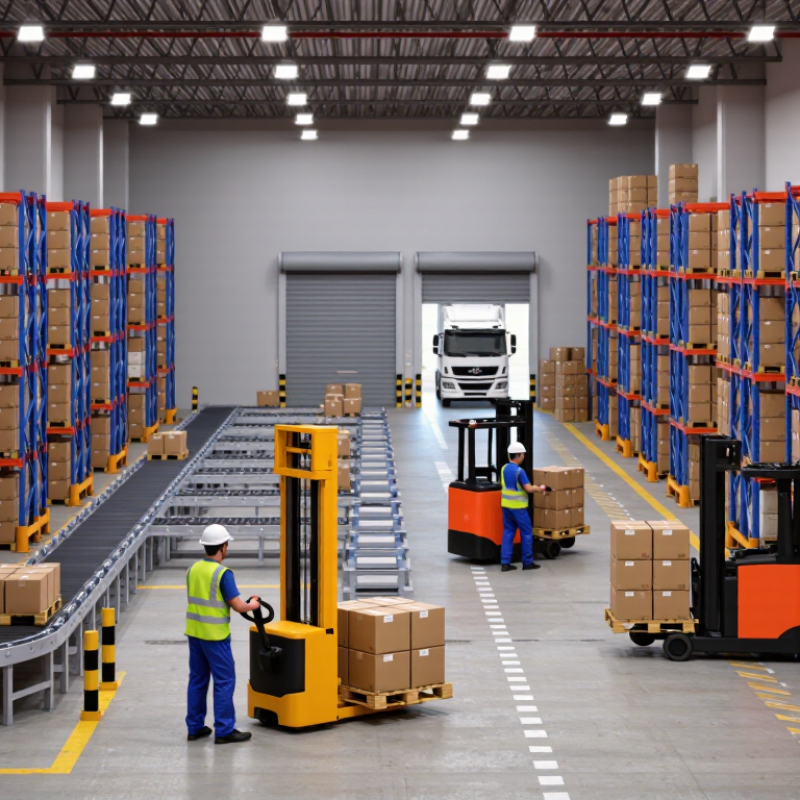
Define the Materials, Loads, and Handling Tasks
How to Choose the Right Material Handling Equipment?
Define the Materials, Loads, and Handling Tasks
Start with the material itself: Is it loose, fragile, hot, dusty, or liquid? Note its dimensions, packaging, center of gravity, and surface condition. Then record the load’s minimum and maximum weight, not just its average. A pallet that is light on paper can become unstable when its contents shift. Measure the extremes.
Next, map each handling task from pickup to placement. Record travel distance, lift height, aisle width, floor condition, and how often the task repeats. The U.S. Bureau of Labor Statistics reported 2.4 nonfatal injury and illness cases per 100 full-time equivalent workers in private industry in 2023. That figure covers many causes, not material handling alone, but it reinforces the value of examining task risks. For example, repeated low lifts or tight turns may call for different equipment than occasional movement across a clear floor. We sometimes overlook awkward loads because their weight seems manageable. That assumption deserves a second look.
Tips: Test the proposed equipment with the actual load, including its packaging. Check turning clearance and operator sightlines. Write down any awkward movements; they often reveal what the specification missed.
How to Choose the Right Material Handling Equipment
Define the materials, loads, and handling tasks before selecting equipment.
Compare the load’s weight and dimensions with the equipment’s rated capacity, then consider travel distance, lift height, aisle width, and surface conditions. Values shown are representative examples, not universal specifications; check the manufacturer’s load chart for the exact model and operating conditions.
Assess Facility Layout, Space, and Workflow
How to Choose the Right Material Handling Equipment?
Assess Facility Layout, Space, and Workflow
Start with the floor, not the equipment catalogue. Measure aisle widths, turning points, door clearances, floor slopes, and the space needed for loading and staging. Trace a typical load from receiving to storage, picking, and dispatch. Note where workers wait, reverse, or cross pedestrian routes. These small bottlenecks can matter more than a machine’s headline capacity.
Use the U.S. Bureau of Labor Statistics’ 2022 injury data as a practical reminder: warehousing and storage recorded 4.8 cases of nonfatal workplace injury or illness per 100 full-time workers, compared with 2.7 across private industry. The figures do not prove that layout alone caused injuries, but they support careful review of traffic flow, visibility, and manual handling. A narrow aisle may suit a compact truck on paper, yet feel unsafe when pallets obscure sightlines. Test proposed equipment against real loads and peak-hour movement. Maps can be wrong.
Tips: Mark pedestrian paths and turning zones with floor tape. Measure the largest load, not the average one. Observe one busy shift before deciding; a quiet walkthrough can miss the real pinch points. Keep a little room for change.
Compare Equipment Types and Key Performance Features
How to Choose the Right Material Handling Equipment?
Compare Equipment Types and Key Performance Features
A pallet truck suits short, level moves between receiving and storage. It is simple to operate, but it cannot replace a lift truck when loads must reach high racks. Stackers handle moderate lifting in tighter spaces. Counterbalance forklifts offer broader versatility, though they need turning room and suitable floor conditions. For repeated movement along fixed routes, conveyors can reduce manual travel. They are less flexible when layouts change.
Compare rated capacity at the actual load center, not just the headline figure. A long or uneven pallet can reduce safe lifting capacity, especially at height. Check lift height, aisle width, turning radius, travel distance, and duty cycle against real site measurements. Small differences matter. A machine that fits on paper may scrape rack uprights during a busy shift. Also consider floor joints, gradients, door clearances, and charging or refuelling access.
Performance is not only speed. Look at operator visibility, braking, control precision, maintenance intervals, and how easily equipment handles peak workloads. Observe a typical shift, including congested periods, before deciding. I have seen teams focus on maximum capacity and overlook the time spent waiting for clear aisles. That estimate can be wrong, too. Record load weights and dimensions, then compare them with equipment capacity charts and the intended route.
Select Equipment That Fits Current and Future Needs
Choosing material handling equipment starts with the work happening on the floor today.
Measure loads, travel distances, aisle widths, shift patterns, and peak volumes before comparing options. A pallet jack may suit short, level moves; a powered truck may be safer for frequent lifts. Small details matter. Check floor joints, turning space, and charging access during a real shift, not only on a drawing.
Future capacity matters too, but forecasts are not orders. MHI’s 2024 Annual Industry Report found that 88% of respondents expected to increase supply chain technology investment over five years; 55% planned to spend more than $1 million within two years. These figures signal investment interest, not a requirement to automate every task. Choose equipment that can expand through compatible attachments, modular layouts, or additional units. Ask how changes affect training, maintenance, and workflow. A faster machine can still create a bottleneck at a narrow dock. Revisit assumptions after a pilot; actual travel times may disappoint. Keep some capacity for growth, but avoid paying today for a volume forecast that may never arrive.